The Cognitive Canvas: How Generative AI and Computer Vision Are Painting the Future of Perception
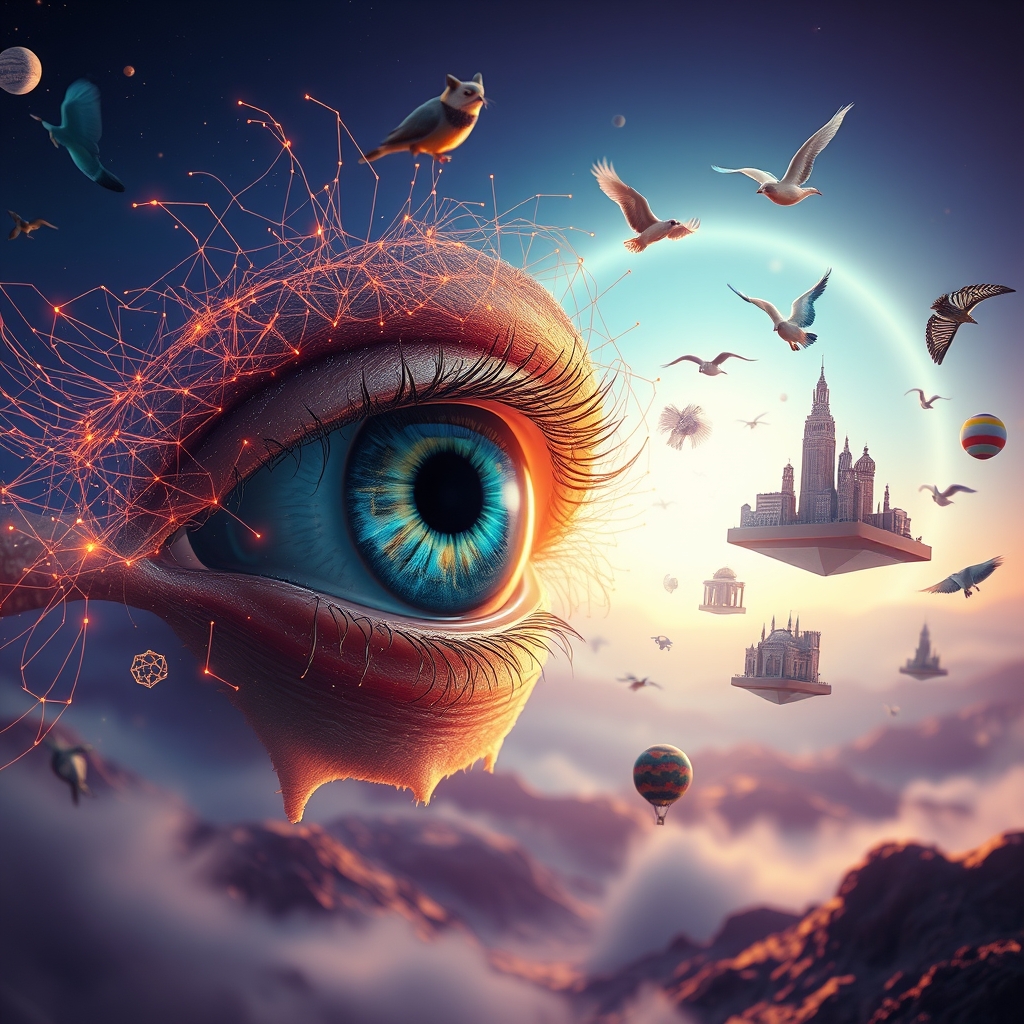
The world is a symphony of colors, shapes, and movements—a ceaseless dance of visual information that our eyes interpret with effortless grace. But what if machines could not only see this world but understand it, reinterpret it, and even reimagine it? This is no longer the stuff of science fiction. It is the reality being sculpted by the confluence of Generative Artificial Intelligence and Computer Vision, a partnership that is redefining the boundaries of perception, creativity, and intelligence.
The Eyes of the Machine
Computer Vision has long been the silent sentinel of the digital age, enabling machines to parse the visual world with increasing precision. From facial recognition systems that unlock our smartphones to autonomous vehicles that navigate bustling city streets, the applications are as vast as they are transformative. Yet, for all its prowess, traditional Computer Vision has been limited by its reliance on static, pre-defined rules and datasets. It could recognize a cat, but it couldn’t dream up a cat that never existed—or imagine one with wings, glowing eyes, and a coat of shimmering stardust.
Enter Generative AI, the artist in this evolving narrative. By leveraging the power of Neural Networks and Deep Learning, Generative AI doesn’t just analyze images; it creates them. Models like Generative Adversarial Networks (GANs) and Variational Autoencoders (VAEs) have unlocked the ability to generate hyper-realistic images, videos, and even 3D environments from scratch. These aren’t mere copies of existing data; they are entirely new creations, born from the latent space of possibility that these models inhabit.
The Alchemy of Perception
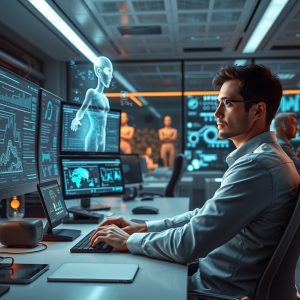
The fusion of Generative AI and Computer Vision is akin to giving machines a pair of eyes and an imagination. Consider the realm of Digital Twins, where virtual replicas of physical systems are brought to life. With Generative AI, these digital twins can evolve beyond mere simulations. They can predict future states, generate alternative scenarios, and even create synthetic environments for training other AI systems. Imagine a digital twin of a smart city that doesn’t just mirror its real-world counterpart but envisions how it could adapt to climate change, population growth, or unforeseen disasters. The possibilities are as limitless as the human imagination itself.
In the world of Autonomous Systems, this partnership is nothing short of revolutionary. Self-driving cars, for instance, rely on Computer Vision to interpret road signs, pedestrians, and obstacles. But what happens when the unexpected occurs—a child chasing a ball into the street, a construction zone with no prior mapping, or a sudden snowstorm obscuring the road? Generative AI steps in, not just to react but to anticipate. By generating synthetic scenarios based on real-world data, these systems can train themselves to handle the unpredictable, turning uncertainty into a navigable landscape.
The Creative Revolution
Beyond the practical, the marriage of Generative AI and Computer Vision is ushering in a creative renaissance. Artists, designers, and filmmakers are harnessing these tools to push the boundaries of visual storytelling. AI-generated art is no longer a novelty; it is a legitimate form of expression, with pieces selling for millions at auction. Filmmakers use Generative AI to create entire scenes, characters, and even worlds that would be impossible or prohibitively expensive to produce otherwise. The line between human and machine creativity is blurring, giving rise to a new era where collaboration between artist and algorithm produces works that are greater than the sum of their parts.
Yet, this creative explosion is not without its ethical dilemmas. The ability to generate hyper-realistic images and videos—so-called deepfakes—raises profound questions about truth, authenticity, and the potential for misuse. As these technologies become more accessible, society must grapple with the implications of a world where seeing is no longer believing. The challenge lies in striking a balance: harnessing the creative and practical potential of Generative AI while safeguarding against its darker applications.
The Future, Seen Through AI’s Eyes
The journey of Generative AI and Computer Vision is still in its infancy, but the trajectory is unmistakable. We are moving toward a future where machines don’t just perceive the world—they understand it, reinterpret it, and contribute to it in ways we are only beginning to comprehend. In healthcare, AI-generated medical images could revolutionize diagnostics, enabling doctors to detect diseases earlier and with greater accuracy. In retail, virtual try-on systems powered by Generative AI could transform the shopping experience, allowing customers to see themselves in clothes, makeup, or even hairstyles before making a purchase.
Moreover, the integration of Edge Computing into this ecosystem promises to make these technologies faster, more efficient, and more accessible. By processing data closer to the source—on devices like smartphones, drones, or IoT sensors—Generative AI and Computer Vision can operate in real-time, without the latency of cloud-based systems. This is the key to unlocking truly autonomous, intelligent systems that can adapt and respond instantaneously to their environments.
The Human Touch
Amidst this technological marvel, it’s easy to lose sight of the human element. After all, the goal of AI is not to replace human perception but to augment it, to extend our capabilities beyond the limits of biology. Generative AI and Computer Vision are tools, but they are tools with the potential to redefine what it means to see, to create, and to understand. They invite us to reimagine the boundaries of art, science, and society, challenging us to think beyond the constraints of the present.
As we stand on the precipice of this new era, one thing is clear: the future of perception is not just about machines seeing the world. It’s about them helping us see it anew, with fresh eyes, deeper insights, and boundless creativity. The canvas is vast, the palette infinite, and the masterpiece is ours to create—together.