
The Unseen Architect: How AI and Advanced Drones Shape Our Future
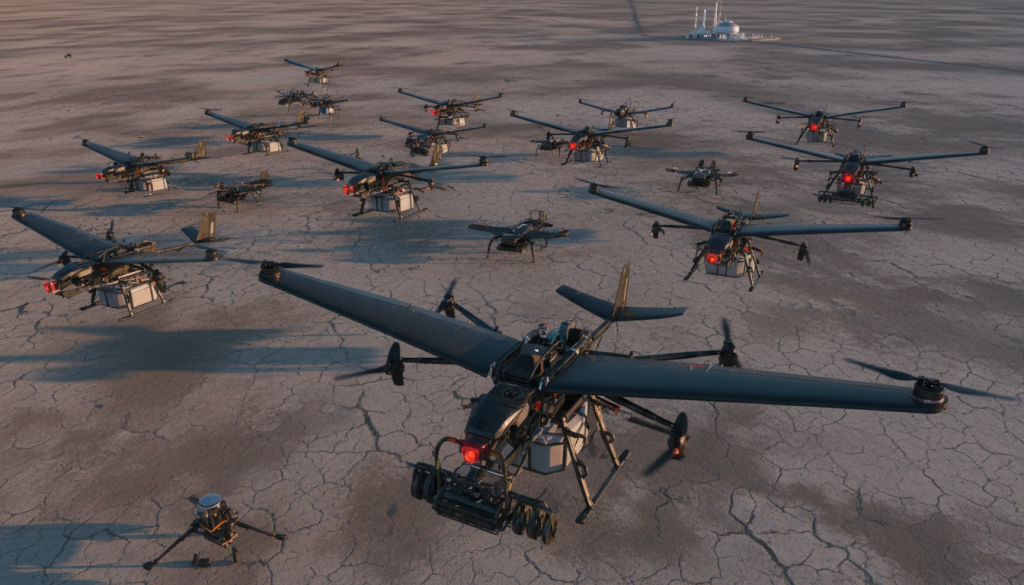
The hum of a drone is becoming an increasingly familiar sound, a subtle overture to a revolution unfolding in the skies. Beyond the consumer gadgets and hobbyist toys, a sophisticated ecosystem of autonomous flight systems is quietly reshaping industries and redefining possibilities. At the heart of this transformation lies a convergence of cutting-edge technologies, from advanced AI-driven navigation and sophisticated obstacle avoidance to the very power sources and communication networks that enable these aerial marvels.
The Intelligence Within: AI-Driven Navigation and Edge Computing
The true magic of modern drones lies not just in their ability to fly, but in their intelligence. AI-driven navigation systems are moving beyond simple pre-programmed routes, enabling drones to perceive, interpret, and react to their environment in real-time. This is powered by advancements in edge computing, where processing power is brought directly to the drone, allowing for instantaneous decision-making without constant reliance on ground control. Imagine a precision agriculture drone, capable of identifying individual plants needing specific nutrient treatments or detecting early signs of disease through thermal imaging sensors, all while autonomously navigating complex field layouts and avoiding unexpected obstacles like rogue branches or sudden gusts of wind. This level of autonomy reduces human error and maximizes efficiency, turning a flying robot into a highly specialized agricultural expert.
Precision and Perception: Sensors and Mapping
The eyes and ears of these advanced drones are their sophisticated sensor suites. Thermal imaging sensors, for instance, unlock a world invisible to the naked eye, revealing heat signatures that can detect infrastructure weaknesses, locate missing persons in challenging terrain, or monitor livestock health. Coupled with high-resolution cameras and advanced photogrammetry mapping techniques, drones can create incredibly detailed 3D models of landscapes, construction sites, or disaster areas. This data is invaluable for planning, monitoring progress, and assessing damage with unprecedented accuracy. Real-time kinematic (RTK) positioning further refines this accuracy, providing centimeter-level precision for tasks like surveying and infrastructure inspection, ensuring that every measurement and every mapped feature is exactly where it should be.
Endurance and Reach: Powering the Future of Flight
The limitations of battery life and range have long been a bottleneck for widespread drone adoption. However, breakthroughs in power technology are changing the game. Hydrogen-powered drones are emerging as a promising solution, offering significantly longer flight times and the potential for rapid refueling, making them ideal for extended surveillance missions or large-scale delivery logistics. For more conventional systems, enhanced brushless motor efficiency and advanced battery management systems are stretching flight envelopes. Furthermore, the integration of 5G connectivity and long-range telemetry ensures that these drones can communicate reliably over vast distances, providing continuous data streams and remote control capabilities essential for operations far beyond visual line of sight.
Beyond the Payload: Specialized Applications
The diverse capabilities of modern drones lend themselves to a wide array of specialized applications. Heavy lift payload drones are revolutionizing construction and logistics, capable of transporting materials to remote or inaccessible locations, significantly reducing the need for traditional heavy machinery. Delivery drone logistics, once a futuristic concept, is rapidly becoming a reality, with autonomous systems navigating complex urban environments to deliver packages swiftly and efficiently. First Person View (FPV) technology, while often associated with racing, also plays a crucial role in inspection and specialized tasks, offering pilots an immersive, real-time perspective for intricate maneuvers. In the realm of security, kinetic drone interception offers a non-destructive method for neutralizing rogue or dangerous aerial threats, ensuring public safety.
The Collaborative Sky: Swarm Intelligence and Remote Identification
The concept of swarm intelligence is unlocking the potential for multiple drones to work collaboratively, coordinating their actions to achieve complex objectives. Imagine a fleet of drones autonomously mapping a large area, each drone optimizing its flight path based on the data collected by its counterparts, creating a seamless and efficient mapping process. This coordinated behavior, powered by sophisticated algorithms, can be applied to search and rescue operations, environmental monitoring, and even agricultural tasks. Complementing this collaborative capability is the growing importance of Remote Identification (Remote ID) systems. As drone traffic increases, Remote ID ensures accountability and security by allowing authorities to identify drones operating in their airspace, fostering a safer and more regulated sky.
The Material Advantage: Carbon Fiber and Fixed-Wing VTOL
The physical construction of drones also plays a vital role in their performance. The use of lightweight yet incredibly strong carbon fiber airframes provides the structural integrity needed for demanding operations while minimizing weight, thereby extending flight times and payload capacity. Furthermore, the development of fixed-wing VTOL (Vertical Take-Off and Landing) aircraft offers the best of both worlds: the hovering capabilities of multi-rotor drones and the efficient, long-range flight of fixed-wing planes. This hybrid design opens up new possibilities for applications requiring both vertical agility and sustained aerial presence, such as long-duration environmental monitoring or high-speed reconnaissance.
As these technologies continue to mature and integrate, the drone is evolving from a mere tool into an intelligent, indispensable partner across countless sectors. The silent hum in the sky is not just a sound; it’s the soundtrack to a future where autonomy, precision, and intelligent collaboration are the architects of progress, building a more efficient, safer, and interconnected world from above.