The Dawn of the Agentic Economy: How AI Agents Will Reshape Our World
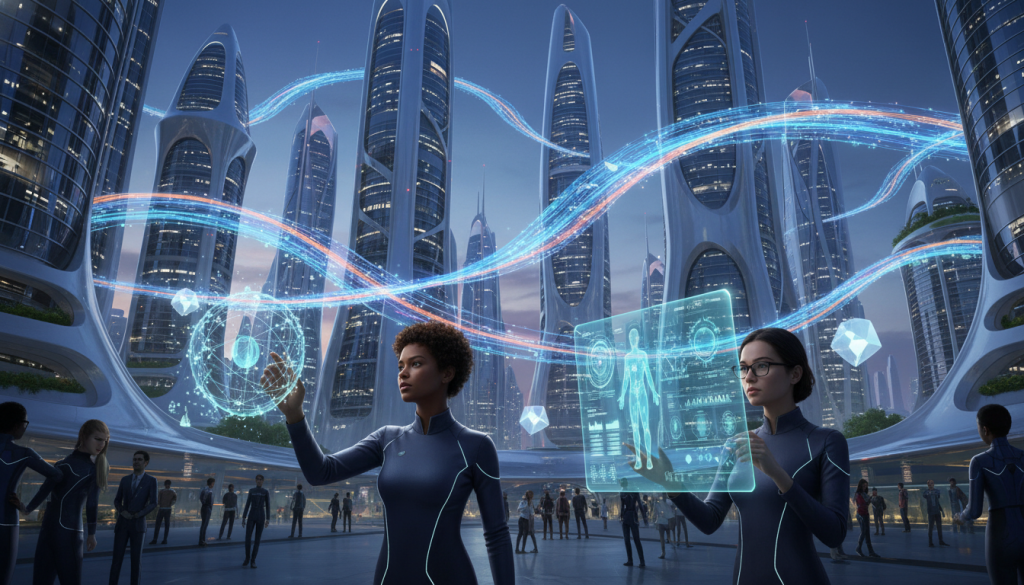
We stand on the precipice of a profound economic transformation, one driven not by human hands alone, but by intelligent digital agents. The concept of the ‘Agentic Economy’ is rapidly moving from the realm of science fiction to tangible reality, promising to redefine how we work, interact, and transact. At its core, this new economic paradigm is powered by Artificial Intelligence (AI), specifically by sophisticated AI agents capable of independent thought, decision-making, and action. These aren’t just advanced chatbots; they are autonomous entities designed to understand goals, plan strategies, and execute tasks with minimal human oversight.
The Evolution of AI Agents
For years, AI has been about automating tasks. From recommendation engines to predictive analytics, AI has already augmented human capabilities. However, the advent of more powerful large language models (LLMs) and advancements in reinforcement learning have unlocked a new level of autonomy. AI agents can now engage in complex reasoning, learn from their environment, and even collaborate with other agents. Imagine an AI agent managing your personal finances, optimizing investments, and handling all your bill payments, or a fleet of AI agents coordinating logistics for a global supply chain with unparalleled efficiency. This is the promise of the agentic economy: a future where digital entities act on our behalf, driving productivity and innovation forward.
Key Pillars of the Agentic Economy
Several technological advancements are converging to make the agentic economy a reality. Firstly, Artificial Intelligence, particularly generative AI and advanced machine learning algorithms, provides the ‘brain’ for these agents. These algorithms enable agents to understand context, learn, adapt, and generate novel solutions. Secondly, Hyper Automation plays a crucial role. It’s not just about automating single tasks, but about automating entire end-to-end processes, which AI agents are perfectly positioned to orchestrate. Think of complex workflows in customer service, IT support, or even scientific research being managed autonomously by a network of AI agents.
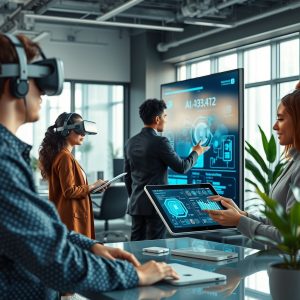
Furthermore, the infrastructure supporting these agents is rapidly evolving. Cloud computing provides the scalable computational power required for these agents to operate. The increasing sophistication of Extended Reality (XR), encompassing virtual, augmented, and mixed reality, will also be instrumental. XR environments can serve as intuitive interfaces for humans to interact with and manage AI agents, visualize their operations, and even collaborate with them in shared virtual spaces. For instance, an architect might use an AR interface to direct an AI agent to redesign a building structure in real-time, seeing the changes overlaid on the physical world.
Challenges and Opportunities
The transition to an agentic economy is not without its challenges. Ethical considerations, such as accountability and bias in AI decision-making, must be addressed proactively. Ensuring the security and privacy of data processed by these agents is paramount. Questions around job displacement and the need for workforce reskilling are also significant. However, the opportunities are immense. Increased efficiency, personalized services, accelerated scientific discovery, and the creation of entirely new industries are all within reach. The agentic economy has the potential to unlock unprecedented levels of productivity and human potential, freeing us from mundane tasks to focus on creativity, critical thinking, and interpersonal connection.
The development of specialized AI agents for tasks like research, coding, content creation, and even personal assistance is accelerating. These agents can learn from vast datasets, identify patterns, and execute complex operations far faster than humans. Consider the implications for scientific research, where AI agents could sift through millions of research papers, identify novel connections, and propose hypotheses, thereby speeding up the pace of discovery in fields like medicine and materials science. In the creative industries, generative AI agents are already composing music, writing scripts, and generating art, hinting at a future of co-creation between humans and machines.
The Future of Work and Life
The agentic economy will fundamentally alter the landscape of work. Instead of employees performing repetitive tasks, human roles will likely shift towards managing, guiding, and collaborating with AI agents. This will demand new skill sets focused on strategic thinking, problem-solving, and understanding AI capabilities. Education systems will need to adapt to prepare individuals for this evolving job market, emphasizing digital literacy and AI fluency. Beyond the workplace, AI agents could revolutionize personal lives, acting as intelligent assistants managing schedules, health, and learning. Imagine an AI agent that monitors your well-being through wearable devices, suggests personalized functional nutrition plans, and even schedules mental fitness exercises, all aimed at promoting holistic longevity.
The integration of AI agents into our daily lives will be gradual but impactful. As these agents become more capable and trustworthy, their adoption will expand across various sectors, from healthcare and finance to education and entertainment. The potential for AI agents to democratize access to expertise and services is also significant. For example, AI agents could provide personalized legal advice, financial planning, or educational tutoring to individuals who might otherwise not have access to such resources. This could lead to a more equitable society, where advanced capabilities are accessible to a broader population.
The evolution of the agentic economy is not merely a technological advancement; it is a societal paradigm shift. As we move forward, fostering a collaborative relationship between humans and AI agents will be key to unlocking its full potential. This partnership promises to usher in an era of unprecedented innovation, efficiency, and personalized experiences, fundamentally reshaping our future.