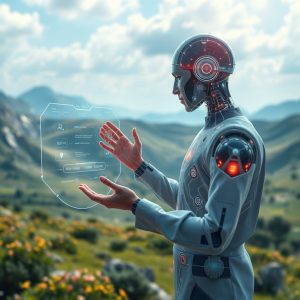
The Converging Frontiers: AI, Swarming Drones, and the Future of Warfare
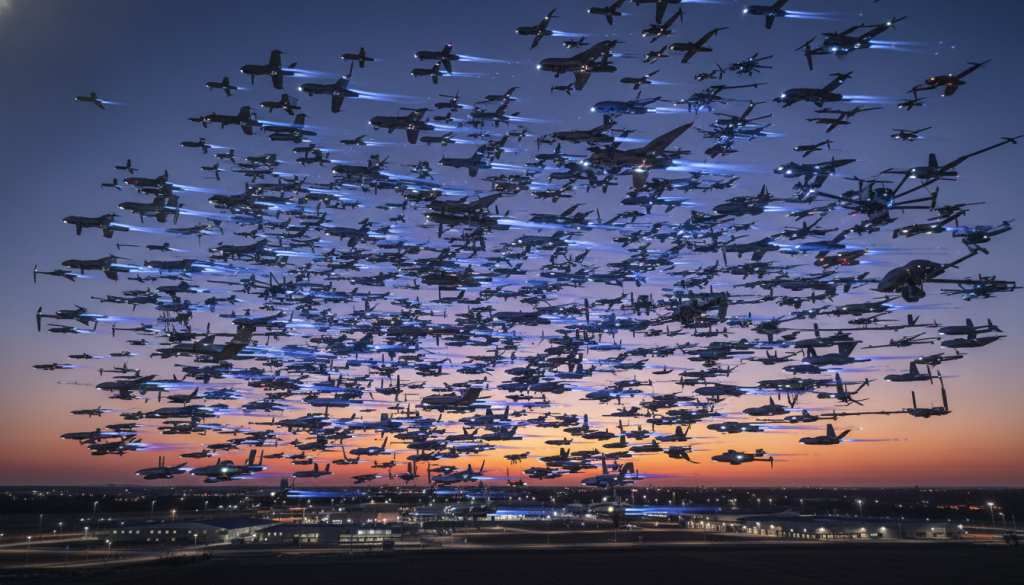
The modern battlefield is undergoing a seismic shift, driven by the relentless march of digital innovation and the strategic application of Artificial Intelligence (AI). At the heart of this transformation lies the concept of swarm tactics, particularly as applied to Unmanned Aircraft Systems (UAS). Imagine a sky alive not with a handful of independent aircraft, but with hundreds, perhaps thousands, of drones acting as a single, cohesive entity. This isn’t science fiction; it’s the rapidly approaching reality of AI-powered autonomous warfare.
The Evolution of Air Power: From Solo Acts to Swarming Spectacles
For decades, air power has been characterized by individual platforms – fighter jets, bombers, reconnaissance aircraft – each a marvel of engineering, but ultimately a solitary actor. The introduction of drones began to alter this paradigm, offering persistent surveillance and strike capabilities without risking human pilots. However, the true revolution is occurring with the advent of AI, enabling these unmanned systems to coordinate, adapt, and execute complex missions autonomously. Swarm tactics, inspired by natural phenomena like ant colonies or bird flocks, leverage the collective intelligence of numerous simpler agents to achieve objectives far beyond the reach of any single unit.
Loitering Munitions and Autonomous Targeting: Precision Meets Persistence
A key component of this evolving landscape is the loitering munition, often referred to as a “kamikaze drone.” These systems can orbit a target area for extended periods, identify and classify targets based on pre-programmed parameters, and then autonomously engage them. When combined with swarm AI, the potential is staggering. Instead of a single loitering munition, a swarm can saturate defenses, overwhelm enemy sensors, and identify high-value targets with unprecedented speed and accuracy. Autonomous targeting systems, powered by advanced AI algorithms, can analyze vast amounts of sensor data in real-time, distinguishing between combatants and civilians with increasing sophistication, although the ethical implications of such autonomy remain a critical area of discussion and development. The goal is to achieve a ‘precision strike’ capability that minimizes collateral damage while maximizing mission effectiveness.
Directed Energy Weapons and Solid State Lasers: The Dawn of a New Offensive
Complementing the rise of autonomous swarms is the development of Directed Energy Weapons (DEWs). Unlike traditional kinetic weapons that rely on physical projectiles, DEWs, such as Solid State Lasers (SSLs), deliver energy directly to a target. This offers advantages like speed-of-light engagement, deep magazines (limited only by power generation), and precise targeting. Imagine a swarm of drones, each equipped with a smaller, directed energy emitter, coordinating to overwhelm a target’s defenses or disable critical systems with focused beams of energy. The integration of DEWs with autonomous swarming capabilities represents a significant leap in offensive and defensive capabilities, offering new ways to achieve battlefield dominance.
Cyber Defense and Digital Innovation: The Invisible Frontline
The digital transformation underpinning these advancements also necessitates robust cyber defenses. As military systems become increasingly interconnected and reliant on AI, they become more vulnerable to cyberattacks. Advanced cyber defense strategies, incorporating AI-driven threat detection and response, are crucial to protecting these complex networks. This involves not only defending against external threats but also ensuring the integrity and security of the AI algorithms themselves. The digital innovation in this space is constant, with new methods for protecting autonomous systems and their data emerging regularly. The concept of a ‘human in the loop’ also extends to cyber operations, where human oversight remains critical for making high-stakes decisions, even in the face of automated threat responses.
Beyond the Battlefield: AI’s Broader Impact
While the military applications are transformative, the underlying technologies have far-reaching implications. Smart wearables and wearable health devices, for instance, are already transforming healthcare by providing continuous monitoring and personalized health insights. Hybrid care models, integrating telemedicine with in-person visits, are becoming the norm, improving accessibility and efficiency. Biofluidic sensors, capable of detecting biomarkers in bodily fluids, promise even more sophisticated diagnostic tools. Even seemingly unrelated fields like adaptive optics, used to correct atmospheric distortions in telescopes, find parallels in how AI can refine sensor data in real-time. The principles of AI-driven coordination and adaptation are not confined to warfare; they are reshaping industries and improving lives across the spectrum of human endeavor.
The convergence of AI, swarm tactics, and advanced weaponry is not merely an evolutionary step; it is a revolutionary leap that will redefine the character of conflict and security. As these technologies mature and integrate, the strategic landscape will continue to shift, demanding constant adaptation and foresight from military planners and policymakers alike. The ethical considerations, the need for robust cyber defenses, and the potential for unintended consequences all underscore the importance of a measured and responsible approach to this powerful new era of warfare.