
The Evolving Battlefield: How Advanced Technologies are Reshaping Modern Warfare
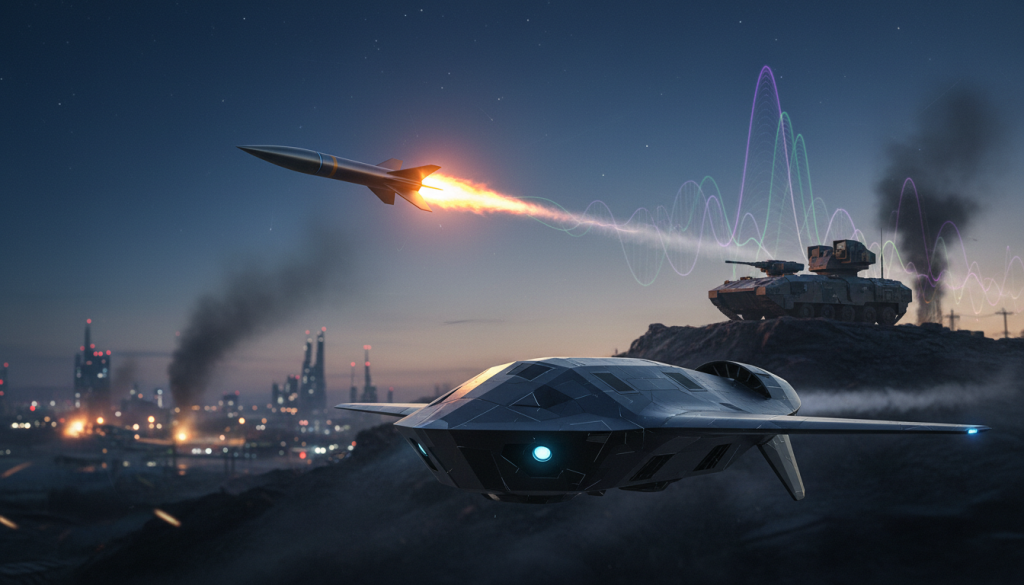
The landscape of modern warfare is undergoing a profound transformation, driven by an unprecedented surge in technological innovation. Gone are the days when brute force and sheer numbers were the sole arbiters of victory. Today, the battlefield is increasingly defined by speed, precision, intelligence, and the ability to operate in contested electronic environments. From the hypersonic speeds of next-generation missiles to the intricate dance of autonomous drone swarms, a new era of conflict is dawning, demanding constant adaptation and strategic foresight from military forces worldwide.
The Dawn of Hypersonic and Autonomous Warfare
Perhaps the most dramatic shifts are occurring with the advent of hypersonic missiles and autonomous drones. Hypersonic weapons, capable of traveling at speeds exceeding Mach 5, represent a significant leap in offensive capabilities. Their sheer velocity, combined with their maneuverability, makes them incredibly difficult to detect, track, and intercept, fundamentally altering strategic deterrence and offensive planning. Nations are racing to develop and deploy these systems, recognizing their potential to neutralize traditional defenses and deliver decisive blows with unprecedented speed.
Complementing the speed of hypersonics is the growing sophistication of autonomous systems, particularly drones. While remote-controlled drones have been a feature of warfare for years, the integration of artificial intelligence is unlocking new levels of autonomy. Autonomous drones, including those operating in coordinated swarms, can perform complex missions with minimal human intervention. Swarm intelligence, inspired by natural phenomena like ant colonies or flocking birds, allows multiple drones to collaborate, share information, and adapt to changing battlefield conditions dynamically. This capability can overwhelm enemy defenses through sheer numbers and coordinated attacks, or provide persistent surveillance and reconnaissance in highly dangerous areas.
Loitering Munitions and Precision Strike
Within the realm of autonomous systems, loitering munitions, often referred to as ‘kamikaze drones,’ have emerged as a potent and cost-effective tool. These weapons can patrol an area for extended periods, identify targets, and then dive onto them with a warhead. Their ability to wait for the opportune moment to strike, combined with their precision guidance, makes them highly effective against high-value targets and hardened positions that might be difficult for conventional artillery or air power to engage effectively. The proliferation of these systems, particularly in recent conflicts, highlights their tactical significance and their potential to democratize precision strike capabilities.
This emphasis on precision is further amplified by advancements in precision-guided munitions (PGMs). Modern PGMs, whether air-launched or ground-launched, can achieve remarkable accuracy, minimizing collateral damage and maximizing effectiveness against designated targets. The integration of advanced sensors, GPS, laser guidance, and inertial navigation systems ensures that these munitions can hit their targets with pinpoint accuracy, even in complex environments.
The Invisible Battle: Electronic Warfare and Cyber Defense
While kinetic capabilities evolve at breakneck speed, the electromagnetic spectrum and cyberspace have become equally critical battlegrounds. Electronic warfare (EW) encompasses a wide range of activities, from signal intelligence and electronic support to electronic attack. Signal jamming, a key component of EW, aims to disrupt enemy communications, radar, and navigation systems, creating chaos and hindering their ability to coordinate and fight effectively. The increasing reliance on networked systems and advanced sensors means that superiority in the electronic domain is no longer an advantage but a necessity.
Closely intertwined with electronic warfare is the domain of cyber defense. As military operations become more digitized and networked, they become more vulnerable to cyberattacks. Robust cyber defense systems are essential to protect critical infrastructure, command and control networks, and sensitive data from infiltration and disruption. Conversely, offensive cyber capabilities can be used to disable enemy systems, spread misinformation, or gain crucial intelligence, making the digital realm a constant arena of conflict.
Directed Energy and Advanced Protection
Looking towards the future, directed energy weapons (DEWs) are poised to revolutionize defense. These weapons, which use concentrated beams of energy (lasers or microwaves) to damage or destroy targets, offer advantages such as speed-of-light engagement, deep magazines (limited only by power supply), and precision targeting. While still facing development challenges, DEWs hold the promise of intercepting fast-moving threats like drones and missiles with unparalleled efficiency.
In parallel, active protection systems (APS) are being developed to defend platforms against threats like anti-tank missiles and rocket-propelled grenades. APS typically work by detecting incoming projectiles and then launching countermeasures to intercept or disrupt them before they reach the protected vehicle. Combined with advancements in stealth technology, which reduces a platform’s detectability by radar, infrared, and other sensors, and sophisticated satellite surveillance providing real-time situational awareness, these layered defense mechanisms create a more resilient operational posture.
The Quantum Leap and Thermal Insights
Looking further ahead, quantum cryptography promises to usher in a new era of secure communications, making it virtually impossible for adversaries to intercept or decipher sensitive military data. This quantum leap in encryption could fundamentally change the nature of information security in warfare.
Meanwhile, thermal imaging technology continues to refine our ability to ‘see’ in darkness and through obscurants like smoke and fog. Advanced thermal sensors are crucial for target identification, surveillance, and reconnaissance, providing critical intelligence in all weather and lighting conditions. Kinetic kill vehicles, designed to destroy incoming ballistic missiles by colliding with them at high speed, represent a sophisticated, albeit complex, approach to missile defense, relying on precise tracking and interception capabilities.
The convergence of these advanced technologies – from the blinding speed of hypersonics and the intelligent coordination of autonomous swarms to the invisible battles waged in cyberspace and the electromagnetic spectrum, and the defensive prowess of directed energy and active protection systems – signifies a fundamental shift in how conflicts will be waged. The future battlefield will demand not only technological superiority but also the agility and intelligence to integrate these diverse capabilities seamlessly, ensuring that military forces can adapt to and dominate an ever-changing operational environment. The ongoing development and integration of these cutting-edge systems underscore a continuous arms race, where innovation is the key to maintaining strategic advantage and ensuring national security in an increasingly complex global arena.