Forging the Future: How Cutting-Edge Technologies Are Redefining Space Exploration
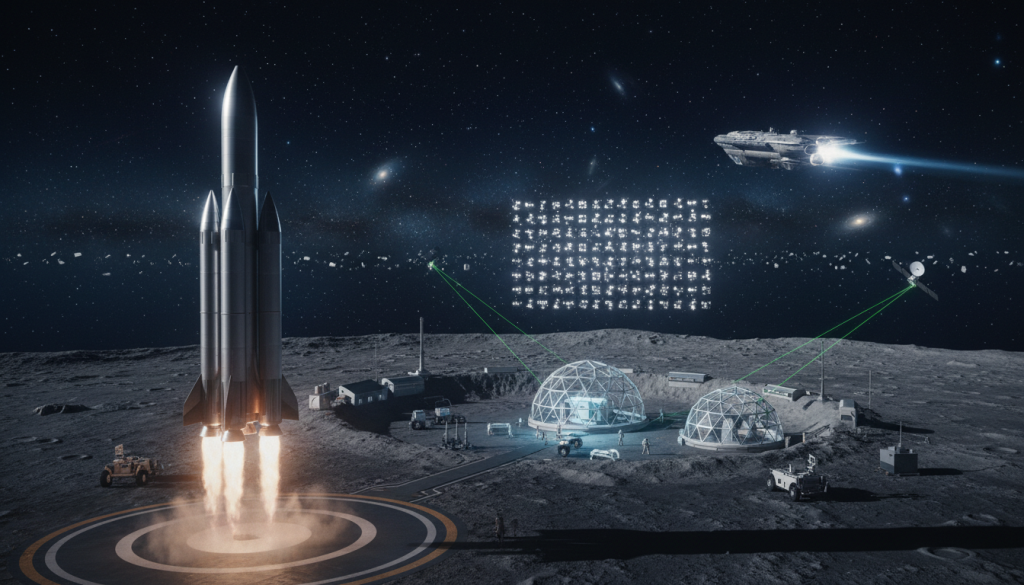
Humanity stands at the precipice of a new golden age of space exploration, one propelled by an unprecedented convergence of technological advancements. The dreams once confined to science fiction are rapidly becoming engineering blueprints, as innovators push the boundaries of propulsion, power, connectivity, and sustainability in the cosmic arena. This isn’t just about reaching further; it’s about establishing a permanent, thriving presence beyond Earth, transforming our understanding of the universe and our place within it.
The Dawn of Sustainable Space Exploration
Powering the Future: Small Modular Reactors (SMRs) and Advanced Nuclear Propulsion
At the heart of any ambitious space endeavor lies the fundamental challenge of power. Traditional chemical rockets, while effective, are limited in their range and efficiency for deep space missions. This is where the promise of advanced nuclear propulsion emerges as a game-changer. Imagine spacecraft capable of reaching Mars in weeks, rather than months, drastically reducing transit times and radiation exposure for astronauts. Concepts like nuclear thermal and nuclear electric propulsion leverage the immense energy density of nuclear reactions, offering the thrust and endurance necessary for truly intercontinental, or rather, interplanetary journeys.
On the ground, or more accurately, on lunar and Martian surfaces, Small Modular Reactors (SMRs) are poised to provide the robust and reliable energy infrastructure essential for sustained human habitats. These compact, factory-fabricated nuclear fission reactors offer significant advantages over larger, traditional plants, including enhanced safety features, reduced construction times, and scalability. Their potential extends beyond terrestrial power grids; imagine an SMR powering a permanent lunar base, providing electricity for life support, resource extraction, and scientific research, freeing missions from the constraints of solar power’s intermittent nature and the vast distances of deep space.
Reusable Launch Vehicles: The Gateway to Affordability
The high cost of accessing space has historically been a formidable barrier, limiting the frequency and ambition of missions. However, the advent of Reusable Launch Vehicles (RLVs) has fundamentally reshaped this economic landscape. By enabling rockets to return and be reflown, the cost per launch has plummeted, democratizing access to Low Earth Orbit (LEO) and beyond. This paradigm shift isn’t merely about saving money; it’s about enabling a future where space is no longer an exclusive domain but a bustling highway for commerce, exploration, and scientific discovery. Cheaper, more frequent launches facilitate the deployment of larger constellations, more complex experiments, and the sustained build-out of off-world infrastructure, making previously unthinkable projects economically viable.
A Connected Cosmos: LEO Telecommunications and Space Situational Awareness
The LEO Revolution: Global Connectivity from Orbit
The proliferation of CubeSat Constellation Deployments in Low Earth Orbit is rapidly transforming global telecommunications. Thousands of small, standardized satellites, working in concert, are creating a mesh network capable of delivering high-speed internet to every corner of the planet, bridging the digital divide and connecting remote communities. This revolution isn’t just about internet access; it’s about enhancing Earth observation, facilitating remote sensing for environmental monitoring, and enabling a new generation of scientific research platforms that are more affordable and easier to deploy than ever before. The sheer volume of data and connectivity these constellations provide is unparalleled, promising to integrate our terrestrial lives with our orbital capabilities.
Navigating the Crowded Frontier: Space Situational Awareness and Orbital Debris Mitigation
As LEO becomes increasingly populated, the imperative for robust Space Situational Awareness (SSA) grows paramount. With thousands of active satellites, spent rocket stages, and fragments of past collisions, the threat of orbital debris is a serious concern. Effective SSA involves tracking every object in orbit, predicting potential collisions, and enabling evasive maneuvers to protect valuable assets. Without diligent monitoring and proactive Orbital Debris Mitigation strategies, the risk of a cascading ‘Kessler Syndrome’ event – where collisions generate more debris, leading to further collisions – becomes a terrifying possibility, potentially rendering certain orbital bands unusable for generations. Developing technologies for active debris removal, alongside stringent guidelines for mission end-of-life, are critical to preserving the accessibility of space.
Beyond Earth: Deep Space Exploration and Resource Utilization
Unlocking the Cosmos: Deep Space Missions and Asteroid Mining Logistics
With advanced propulsion and sustainable power, the scope of Deep Space Exploration expands dramatically. Missions to the outer planets become more feasible, and the prospect of human outposts on Mars and even further into the solar system moves closer to reality. This ambitious future will inevitably lead to the development of Asteroid Mining Logistics. The vast resources locked within asteroids – precious metals, rare earth elements, and water ice – represent an almost limitless supply of materials for manufacturing, construction, and even rocket fuel. Tapping into these extraterrestrial reservoirs could not only fuel our expansion across the solar system but also alleviate resource scarcity on Earth, establishing a truly multi-planetary economy.
The journey ahead is complex, fraught with engineering challenges and ethical considerations, but the collective ingenuity of humanity is rising to meet them. From harnessing the power of the atom for propulsion and sustainable bases, to making space access routine and affordable with reusable rockets, and weaving a global network of connectivity through LEO constellations, each technological leap is interconnected. The careful management of our orbital environment through sophisticated Space Situational Awareness and proactive debris mitigation ensures that this future remains open and accessible. Ultimately, these advancements are not merely about conquering space; they are about expanding the horizons of human potential, fostering innovation, and perhaps, discovering our true place in the grand tapestry of the cosmos, leaving us with a profound sense of wonder and limitless possibility.