
The Dawn of a New Nuclear Era: Innovations Reshaping Energy and Beyond
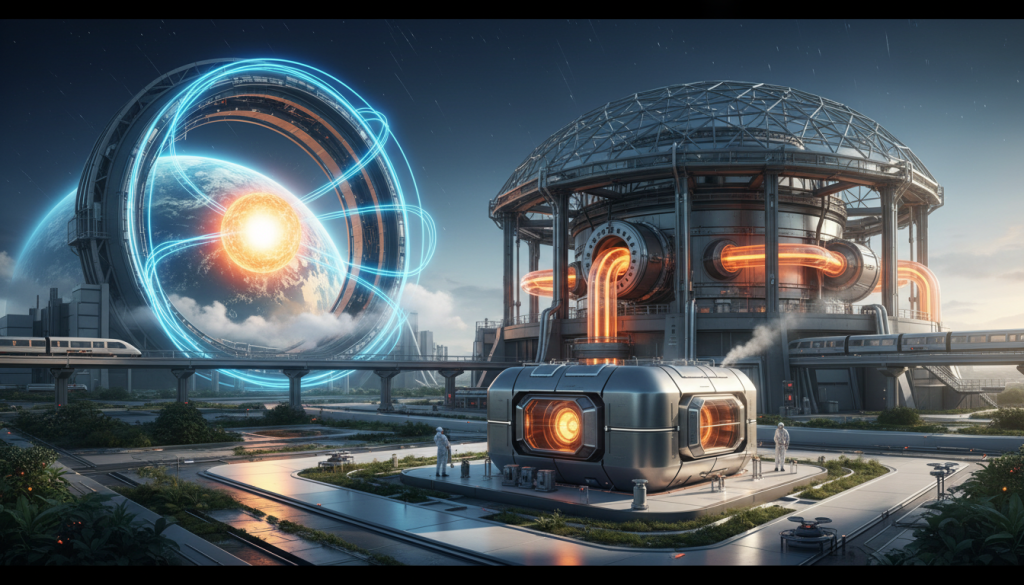
The world stands on the precipice of a profound transformation in nuclear technology. For decades, nuclear energy has been synonymous with large, complex, and often controversial power plants. However, a wave of innovative designs and approaches is set to redefine its role, promising cleaner, safer, and more versatile applications. From the micro-scale to the immensely powerful, a new generation of nuclear technology is emerging, poised to address some of humanity’s most pressing energy and scientific challenges.
The Rise of Small Modular Reactors (SMRs) and Microreactors
Leading this charge are Small Modular Reactors (SMRs) and their even smaller cousins, microreactors. Unlike traditional behemoths, SMRs are designed for factory fabrication and can be deployed in modules, significantly reducing construction time and cost. Their smaller footprint and inherent safety features, often relying on passive cooling systems that don’t require external power, make them attractive for a wider range of applications. These include powering remote communities, industrial sites, and even replacing aging fossil fuel plants. Microreactors, capable of being transported by truck or even air, represent the ultimate in deployable nuclear power, offering robust energy solutions for military bases, disaster relief operations, and off-grid industrial facilities. The potential for rapid deployment and scalability offers a compelling pathway to decarbonize sectors that have historically been difficult to electrify.
Generation IV Designs: A Leap in Efficiency and Safety
Beyond size, the very designs of nuclear reactors are undergoing a radical evolution. Generation IV designs, a suite of advanced reactor concepts, promise significant improvements in safety, sustainability, waste reduction, and economics. Among these, Molten Salt Reactors (MSRs) stand out. Instead of solid fuel rods, MSRs use a liquid fuel dissolved in a molten salt coolant. This offers several advantages: the fuel can be continuously processed to remove fission products (reducing waste and potential for proliferation), the fuel itself can operate at higher temperatures leading to greater efficiency, and the liquid nature of the fuel significantly enhances safety by preventing meltdown scenarios common in solid-fuel reactors. Fast Breeder Reactors (FBRs), another Gen IV concept, can actually produce more fissile material than they consume, potentially extending uranium resources for centuries and enabling advanced fuel cycles. These designs are not just about incremental improvements; they represent a fundamental rethinking of how nuclear reactions can be harnessed.
Beyond Uranium: The Thorium Fuel Cycle and Advanced Fuels
The conventional nuclear industry has long relied on uranium. However, the thorium fuel cycle presents a compelling alternative. Thorium, which is more abundant than uranium and produces less long-lived radioactive waste, can be utilized in some advanced reactor designs, particularly MSRs. Thorium is not fissile itself but becomes fissile when it absorbs a neutron, transforming into uranium-233. This process can lead to a more sustainable and potentially safer nuclear fuel cycle, with a significantly reduced waste burden. Advanced fuel cycle research is also exploring novel fuel forms and reprocessing techniques to further enhance efficiency, reduce waste, and minimize proliferation risks, moving away from the linear ‘once-through’ fuel use model.
The Promise of Nuclear Fusion
While fission reactors harness the energy released from splitting atoms, nuclear fusion aims to replicate the power source of the sun by fusing light atomic nuclei, typically isotopes of hydrogen like deuterium and tritium. The allure of fusion is immense: an almost inexhaustible fuel supply (deuterium from seawater, tritium bred from lithium), inherently safe operation with no risk of meltdown, and no long-lived radioactive waste. The primary challenges lie in achieving and sustaining the extreme temperatures and pressures required for fusion, and in confining the resulting plasma. Magnetic Confinement Fusion (MCF), exemplified by tokamak and stellarator designs, uses powerful magnetic fields to hold the superheated plasma. Inertial Confinement Fusion (ICF), on the other hand, uses high-powered lasers or particle beams to rapidly compress and heat a fuel pellet. While significant scientific and engineering hurdles remain, recent breakthroughs in both MCF and ICF, coupled with substantial private investment, suggest that fusion power is moving from the realm of theoretical possibility towards practical realization. The ability to breed tritium within the fusion reactor itself is a critical aspect of making fusion a self-sustaining energy source.
Nuclear Technology’s Expanding Horizons
The impact of these advancements extends far beyond grid-scale electricity generation. Radioisotope Thermoelectric Generators (RTGs), which use the heat from radioactive decay to produce electricity, have long powered deep-space probes and remote scientific instruments. The principles behind advanced reactors also have implications for nuclear propulsion, offering potential for faster, more efficient spacecraft and even submarines. Furthermore, the sophisticated tools and understanding developed for nuclear research, such as particle accelerators and neutron activation analysis, are invaluable in fields ranging from medical imaging and cancer treatment (nuclear medicine) to materials science and security. The intricate dance of plasma containment, neutron activation, and advanced fuel cycles are not just academic pursuits; they are the building blocks for a future powered by cleaner, more efficient, and incredibly versatile nuclear technologies, potentially even enabling small-scale fusion devices for specialized applications.