The Agentic Economy: How AI Agents are Reshaping Our Economic Landscape

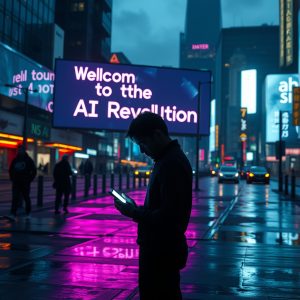
The relentless march of Artificial Intelligence (AI) is not just about smarter algorithms or more sophisticated chatbots. It’s about a fundamental shift in how economic activity is organized and executed. We are on the cusp of what many are calling the ‘Agentic Economy,’ a paradigm where autonomous AI agents, acting on our behalf, become primary economic actors. This isn’t science fiction; it’s a rapidly evolving reality that promises to redefine industries, reshape employment, and alter our very relationship with commerce.
Understanding the Agentic Economy
At its core, the Agentic Economy is built upon the concept of AI agents. These are not simple programs; they are sophisticated entities capable of perceiving their environment, making decisions, and taking actions to achieve specific goals. Crucially, these agents can operate autonomously, learning and adapting over time without constant human supervision. Imagine an AI agent tasked with managing your investments, another negotiating your next car purchase, or a network of agents coordinating complex supply chains. This is the essence of the agentic future.
The key differentiator of the agentic economy is the shift from human-driven transactions to agent-driven ones. Currently, we interact with digital systems and services as users. In the agentic economy, we will increasingly delegate tasks, negotiations, and even complex decision-making processes to AI agents that represent our interests. These agents will leverage vast amounts of data, sophisticated predictive models, and real-time market analysis to execute tasks with unparalleled efficiency and precision.
Transforming Industries
The implications for various industries are profound. In finance, AI agents could autonomously manage portfolios, execute trades, and even underwrite loans, potentially leading to more efficient and personalized financial services. Customer service will be revolutionized, with agents handling complex queries, resolving issues, and even proactively anticipating customer needs. The travel industry could see agents booking flights and accommodations based on user preferences, budget, and real-time availability, optimizing for the best possible deals.
Supply chain management is another area ripe for disruption. Agentic systems can monitor inventory levels, predict demand fluctuations, optimize logistics, and even negotiate with suppliers, creating a more resilient and responsive global supply network. In healthcare, agents could assist in patient monitoring, appointment scheduling, and even preliminary diagnosis based on symptoms and medical history, freeing up human professionals for more critical tasks.
The Role of Hyperautomation
The rise of the Agentic Economy is intrinsically linked to the advancements in Hyperautomation. Hyperautomation is the concept of automating as many business and IT processes as possible using a combination of tools, including AI, machine learning, robotic process automation (RPA), and other automation technologies. Agentic AI agents are the ultimate embodiment of hyperautomation, capable of not just executing predefined tasks but also identifying new automation opportunities and orchestrating complex workflows independently.
This synergy means that as hyperautomation tools become more powerful and pervasive, the capabilities of AI agents will expand exponentially. They will be able to tackle increasingly complex problems, integrate with a wider array of systems, and operate with greater autonomy, driving efficiency and innovation across the board.
Challenges and Ethical Considerations
While the potential benefits are immense, the Agentic Economy also presents significant challenges. The most immediate concern is the impact on employment. As AI agents take over tasks previously performed by humans, there will be a substantial need for reskilling and upskilling the workforce. New roles will emerge focused on developing, managing, and overseeing these AI agents, but the transition could be disruptive.
Ethical considerations are paramount. How do we ensure that AI agents act in our best interests and avoid bias? Who is accountable when an agent makes a mistake or causes harm? Establishing clear governance frameworks, robust security protocols, and transparent decision-making processes for AI agents will be critical. The potential for misuse, such as autonomous agents engaged in cyber warfare or market manipulation, also requires careful consideration and proactive regulation.
Preparing for the Agentic Future
Navigating the Agentic Economy requires a proactive approach. Businesses need to start exploring how AI agents can augment their operations, identify areas for automation, and invest in the necessary infrastructure and talent. Individuals, too, must embrace lifelong learning and adapt to a job market where collaboration with AI agents will be the norm. Understanding the capabilities and limitations of these agents, and developing the skills to effectively delegate and manage them, will be crucial for future success.
The transition to an Agentic Economy is not a distant possibility but an ongoing evolution. It demands a thoughtful engagement with the technology, a commitment to ethical development, and a willingness to adapt to new ways of working and transacting. As AI agents become more sophisticated and integrated into our daily lives, their ability to act as autonomous economic participants will fundamentally alter our world, presenting both unprecedented opportunities and significant challenges that we must collectively address.