
The Future of Drones: How Cutting-Edge Technology is Revolutionizing Autonomous Flight Systems
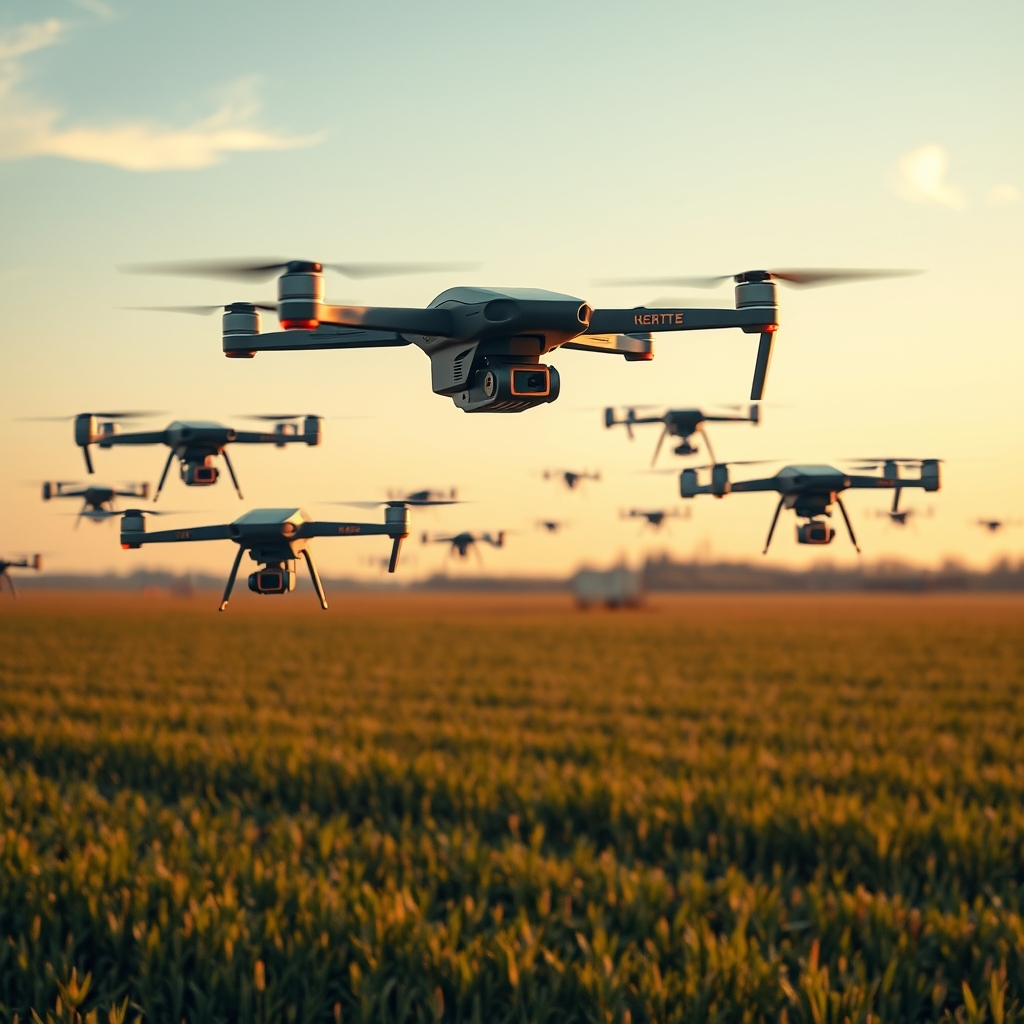
The rapid evolution of drone technology is reshaping industries, from agriculture to logistics, by integrating advanced autonomous flight systems that push the boundaries of what was once thought possible. These systems are no longer confined to hobbyist use; they are now critical tools in precision agriculture, delivery logistics, and even kinetic drone interception. As drones become smarter, more efficient, and more capable, they are unlocking new possibilities that were previously unimaginable.
The Rise of Autonomous Flight Systems
Autonomous flight systems represent the backbone of modern drone technology. By leveraging AI-driven navigation, these systems allow drones to operate with minimal human intervention, making them ideal for complex tasks such as photogrammetry mapping and real-time kinetic positioning. The integration of swarm intelligence further enhances their capabilities, enabling multiple drones to work in unison, coordinating movements with precision to cover large areas efficiently. This is particularly valuable in applications like search and rescue or large-scale agricultural monitoring, where time and accuracy are critical.
One of the most significant advancements in autonomous flight is obstacle avoidance technology. Using a combination of sensors, cameras, and machine learning algorithms, drones can now navigate through dynamic environments without colliding with objects. This technology is essential for delivery drone logistics, where drones must safely traverse urban landscapes filled with buildings, power lines, and other obstacles. The ability to avoid collisions not only ensures the safety of the drone but also protects the payload and the people below.
Precision Agriculture: Drones as the Farmers’ New Best Friend
In the realm of precision agriculture, drones equipped with thermal imaging sensors and multispectral cameras are transforming how farmers manage their crops. These drones can detect variations in plant health, moisture levels, and even pest infestations by capturing data that is invisible to the naked eye. By analyzing this data, farmers can make informed decisions about irrigation, fertilization, and pesticide application, leading to higher yields and reduced waste.
Fixed-wing VTOL (Vertical Take-Off and Landing) drones are particularly well-suited for agricultural applications. Their ability to cover vast areas quickly while maintaining the precision of a multirotor drone makes them ideal for large farms. Additionally, the use of long-range telemetry ensures that these drones can operate over extended distances without losing connectivity, providing real-time data to farmers no matter how remote their fields may be.
Delivery Drone Logistics: The Next Frontier in E-Commerce
The concept of delivery drone logistics is no longer science fiction. Companies around the world are testing and deploying drones to transport goods, from medical supplies to consumer packages, with unprecedented speed and efficiency. The key to this revolution lies in the combination of heavy-lift payload capabilities and advanced navigation systems. Drones designed for delivery must be able to carry significant weight while maintaining stability and precision during flight.
Remote identification technology plays a crucial role in the widespread adoption of delivery drones. This system allows authorities to track drones in real-time, ensuring compliance with regulations and enhancing public safety. As 5G connectivity becomes more widespread, the potential for real-time data transmission and control of delivery drones will only grow, making drone-based logistics a viable alternative to traditional ground transportation.
Innovations in Power and Efficiency
The efficiency of drones has seen remarkable improvements thanks to advancements in brushless motor technology and carbon fiber airframes. Brushless motors offer higher power-to-weight ratios, longer lifespans, and greater reliability compared to their brushed counterparts. Meanwhile, carbon fiber airframes provide the strength and durability needed for heavy-lift applications while keeping the drone lightweight, which is essential for maximizing flight time and payload capacity.
Hydrogen-powered drones are another exciting development in the quest for longer flight times and reduced environmental impact. Unlike traditional lithium-ion batteries, hydrogen fuel cells can provide drones with extended endurance, making them ideal for long-range missions. This technology is still in its early stages, but it holds immense promise for the future of drone operations, particularly in industries where endurance is critical, such as surveillance and environmental monitoring.
The Role of Edge Computing and AI in Drone Technology
Edge computing is revolutionizing how drones process data by enabling real-time analysis without the need for constant cloud connectivity. This is particularly important for applications like kinetic drone interception, where split-second decisions can mean the difference between success and failure. By processing data locally, drones can react faster to changing conditions, whether it’s avoiding an obstacle or identifying a target.
AI-driven navigation is another game-changer, allowing drones to adapt to their environment dynamically. For example, in first-person view (FPV) racing, AI can help drones navigate complex courses at high speeds, learning from each flight to improve performance. In more practical applications, such as photogrammetry mapping, AI can stitch together thousands of images to create highly accurate 3D models of terrain, buildings, or infrastructure.
The integration of 5G connectivity further enhances the capabilities of drones by enabling ultra-low latency communication. This is essential for applications that require real-time control, such as remote inspections of infrastructure or live broadcasting of events. With 5G, drones can transmit high-definition video and data instantaneously, opening up new possibilities for industries that rely on timely information.
As drone technology continues to advance, the possibilities seem limitless. From autonomous flight systems that enable swarms of drones to work together seamlessly, to hydrogen-powered drones that can stay aloft for hours, the future of drones is bright. These innovations are not just improving efficiency and reducing costs; they are also creating entirely new industries and opportunities. The skies are no longer the limit—they are the next frontier, and drones are leading the way.