
The Invisible Web: How Swarm Intelligence and Edge Computing Are Redefining Drone Autonomy
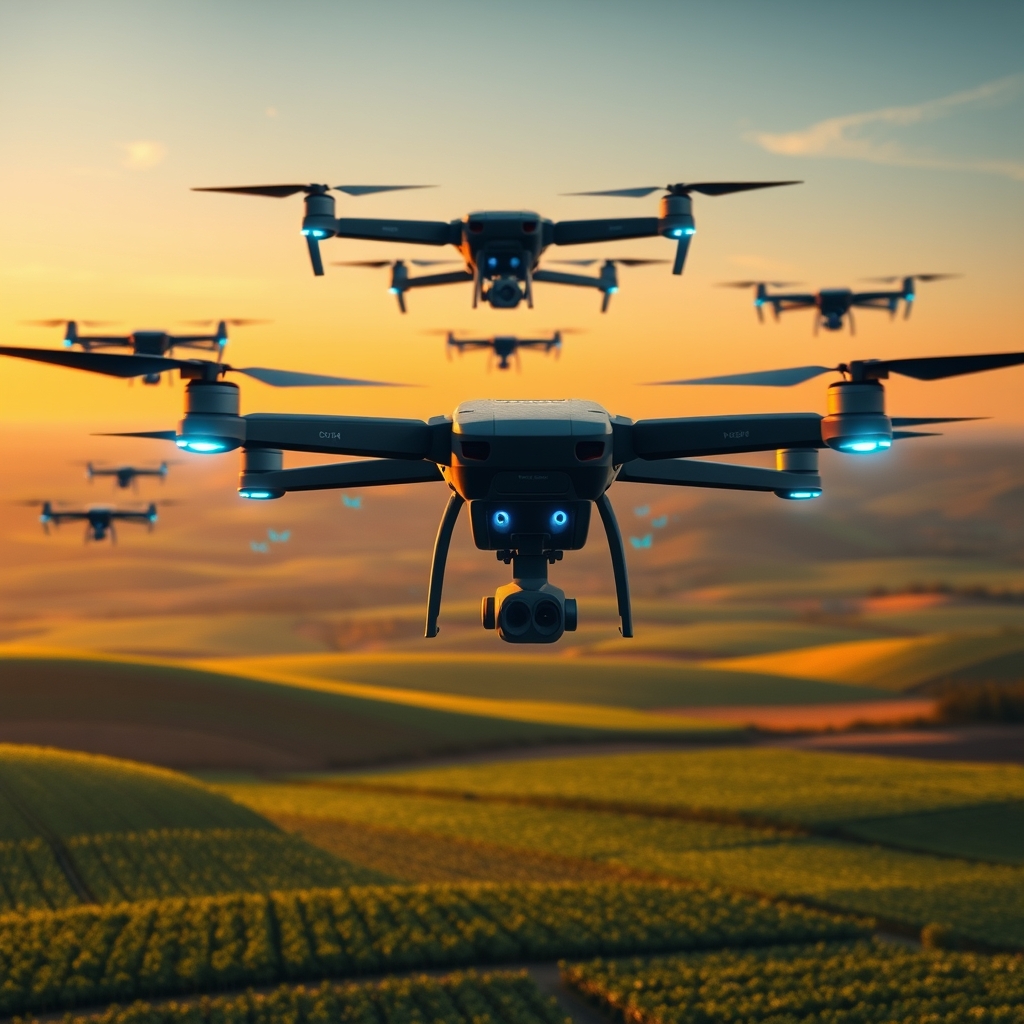
The air hums with a quiet, electric energy as a fleet of drones ascends in perfect unison, their carbon fiber airframes glinting under the morning sun. They move not as individual machines, but as a single, fluid organism—adjusting, reacting, and adapting in real time. This is not the future of flight; it is the present, where swarm intelligence and edge computing have transformed drones from solitary tools into a synchronized, intelligent network capable of reshaping industries from agriculture to logistics.
The Rise of the Collective Mind
Swarm intelligence, inspired by the natural behaviors of bees, ants, and birds, has unlocked a new paradigm in autonomous flight systems. Each drone in a swarm operates with a degree of independence, yet remains deeply interconnected with its counterparts. Through decentralized decision-making, drones can dynamically redistribute tasks, avoid collisions, and even compensate for the failure of a single unit without missing a beat. This is not merely coordination—it is a form of collective cognition, where the whole becomes far greater than the sum of its parts.
In precision agriculture, swarms equipped with thermal imaging sensors and multispectral cameras can scan vast fields in a fraction of the time it would take a single drone. They identify crop stress, irrigation inefficiencies, and pest infestations with surgical precision, relaying data back to farmers in real time. The result? Higher yields, reduced resource waste, and a level of agricultural insight that was once unimaginable. Meanwhile, in urban environments, delivery drone logistics leverage swarm intelligence to optimize routes, ensuring packages reach their destinations faster and with minimal energy expenditure.
The Power of Thinking at the Edge
But intelligence alone is not enough. For drones to operate with true autonomy, they must process vast amounts of data instantaneously—a challenge that has led to the rise of edge computing in UAVs. Unlike traditional cloud-based systems, which introduce latency and reliance on external networks, edge computing brings the processing power directly to the drone. This means obstacle avoidance technology, AI-driven navigation, and real-time kinematic positioning can occur in milliseconds, without the need for constant communication with a distant server.
Consider a hydrogen-powered drone conducting photogrammetry mapping over rugged terrain. With edge computing, it can analyze topographical data on the fly, adjusting its flight path to capture the most critical angles while conserving energy. Similarly, in kinetic drone interception scenarios—where rogue UAVs must be neutralized—edge computing enables split-second reactions, ensuring safety without human intervention. The implications are profound: drones are no longer just eyes in the sky; they are decision-makers, capable of acting with the speed and precision of a well-trained pilot.
The Backbone of Modern Drone Architecture
Behind these advancements lies a foundation of cutting-edge engineering. Carbon fiber airframes provide the strength-to-weight ratio necessary for heavy-lift payloads, while brushless motor efficiency ensures prolonged flight times. Long-range telemetry, bolstered by 5G connectivity, allows operators to maintain control over vast distances, whether managing a swarm over a farm or a single fixed-wing VTOL drone surveying a coastline. Remote identification systems, meanwhile, ensure compliance with evolving regulations, embedding digital fingerprints into each flight for accountability and safety.
Yet, perhaps the most transformative element is the integration of AI-driven navigation. Gone are the days of pre-programmed waypoints; today’s drones learn, adapt, and optimize their paths based on environmental variables. They can predict wind patterns, adjust for thermal currents, and even reroute around unexpected obstacles—all while maintaining their role within a larger swarm. This level of autonomy is not just a technological marvel; it is a fundamental shift in how we interact with machines.
The Silent Revolution in the Skies
As these technologies converge, the boundaries of what drones can achieve continue to expand. In disaster response, swarms equipped with thermal imaging sensors can locate survivors in rubble, their edge computing capabilities allowing them to prioritize search areas based on movement and heat signatures. In infrastructure inspection, drones with photogrammetry mapping tools create 3D models of bridges, pipelines, and power lines, identifying structural weaknesses before they become critical failures. And in the realm of defense, kinetic drone interception systems stand ready to neutralize threats with a precision that was once the domain of science fiction.
The skies are no longer a frontier to be conquered, but a dynamic ecosystem to be harmonized with. The drones of today are not merely tools; they are partners in progress, working alongside humans to solve some of our most pressing challenges. As swarm intelligence and edge computing continue to evolve, the line between machine and mind blurs, giving rise to a new era of flight—one where the invisible web of connectivity and autonomy weaves itself into the fabric of our daily lives, silently, seamlessly, and with boundless potential.