The Whispering Fields: How Agentic AI and Multispectral Imaging Are Cultivating the Soul of Precision Agriculture
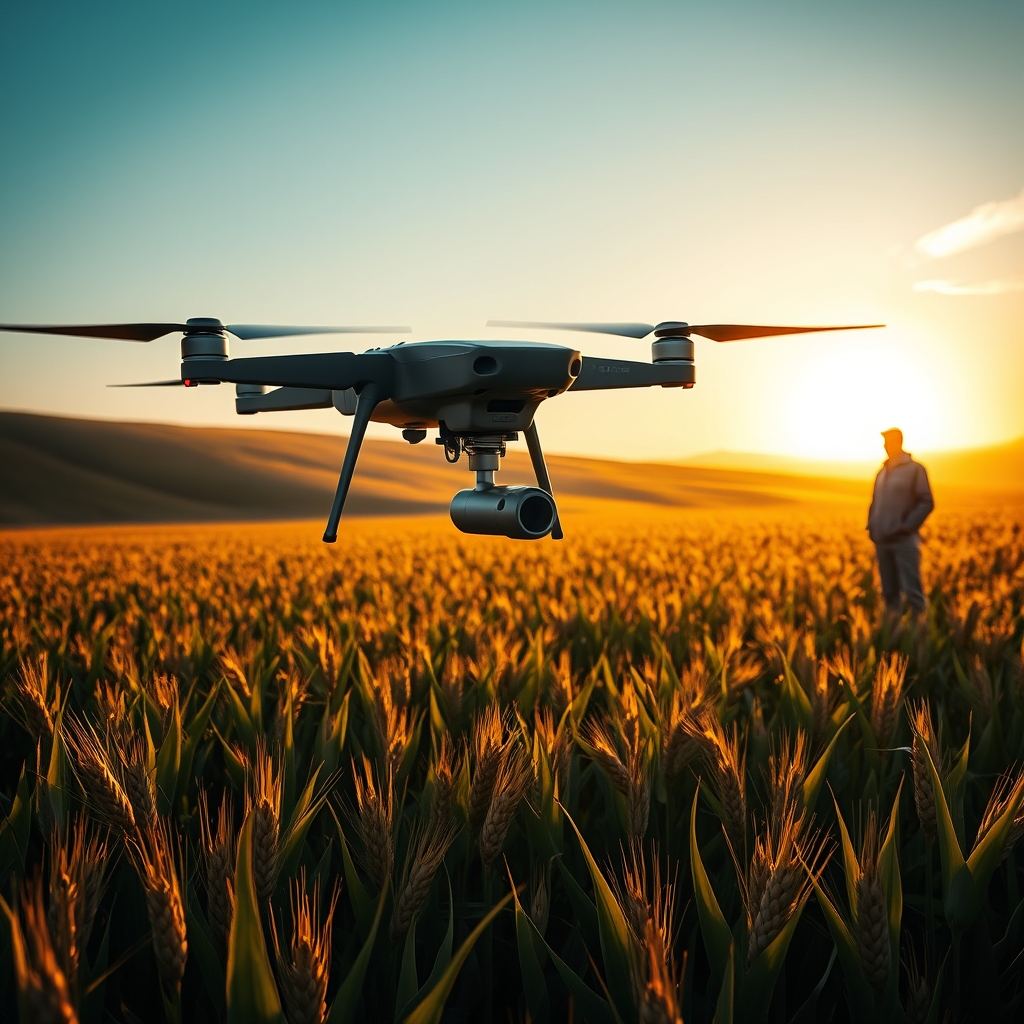
The first light of dawn spills across the undulating landscape, painting the fields in hues of gold and amber. Here, where the earth breathes and the crops sway in silent conversation with the wind, a quiet revolution is unfolding. It is not marked by the roar of engines or the clatter of machinery, but by the almost imperceptible hum of drones gliding overhead, their sensors drinking in the secrets of the soil and the whispers of the plants. This is the realm of precision agriculture, where every leaf, every root, and every drop of water is accounted for, not by the hands of farmers alone, but by the invisible tendrils of Agentic AI and the piercing gaze of multispectral imaging.
The Eyes That See Beyond the Visible
To the naked eye, a field of wheat may appear as a uniform sea of green, a monochrome canvas stretching to the horizon. But beneath this veneer of simplicity lies a world of complexity, where each plant tells a story of health, stress, or vitality. Multispectral imaging is the key that unlocks these narratives. By capturing light across multiple wavelengths—beyond the visible spectrum—these sensors reveal what human eyes cannot: the subtle shifts in chlorophyll levels, the hidden signs of disease, or the early stages of nutrient deficiency. A leaf that appears healthy in visible light might glow with the telltale signatures of drought stress in the near-infrared, a silent cry for help that only the right technology can hear.
Drones equipped with multispectral cameras crisscross the fields, their flight paths meticulously planned by algorithms that ensure no corner of the land is left unexamined. The data they collect is not just a snapshot in time but a living, breathing map of the farm, updated with each pass. This is where Agentic AI steps in, not as a passive observer, but as an active participant in the dance of cultivation. Unlike traditional AI, which waits for commands, Agentic AI takes initiative. It analyzes the multispectral data in real-time, identifying patterns, predicting outcomes, and making decisions with a level of precision that would leave even the most seasoned farmer in awe.
The Symphony of Data and Decision
Imagine a field where every plant is a note in a grand symphony, and the farmer is the conductor. Agentic AI is the invisible hand that ensures each note is played at the perfect moment, with the perfect intensity. When the multispectral imaging detects a patch of crops showing signs of nitrogen deficiency, the AI doesn’t just flag the issue—it calculates the optimal amount of fertilizer needed, dispatches a precision applicator to the exact location, and adjusts the irrigation schedule to ensure the nutrients are absorbed efficiently. It does this not in days or hours, but in minutes, turning what was once a reactive process into a proactive one.
But the true magic lies in the AI’s ability to learn and adapt. With each season, it refines its understanding of the land, the crops, and the ever-changing variables of weather and climate. It doesn’t just follow a set of rules; it evolves, becoming more attuned to the nuances of the farm. This is not the cold, mechanical intelligence of science fiction, but something far more organic—a digital extension of the farmer’s intuition, sharpened by data and guided by experience.
The Dance of Water and Light
Water is the lifeblood of agriculture, and in many parts of the world, it is a resource as precious as it is scarce. Here, too, Agentic AI and multispectral imaging are transforming the way farmers manage this vital element. By analyzing the moisture content of the soil and the water stress levels of the plants, the AI can determine exactly when and where to irrigate, ensuring that not a single drop is wasted. It can even predict rainfall patterns, adjusting irrigation schedules in advance to maximize efficiency. In regions where drought is a constant threat, this level of precision can mean the difference between a bountiful harvest and a failed crop.
But the AI’s role doesn’t end with water. It also optimizes the use of sunlight, ensuring that crops receive the right amount of light at every stage of their growth. By analyzing the multispectral data, it can identify areas where plants are receiving too much or too little light, adjusting the placement of shade nets or even the orientation of the rows to create the ideal conditions. It’s a delicate balance, one that requires a deep understanding of the interplay between light, water, and plant physiology—a balance that Agentic AI is uniquely equipped to achieve.
The Human Touch in a Digital Age
For all its sophistication, this technology is not about replacing the farmer but empowering them. The best farmers have always been those who could read the land, who understood the subtle signs of a changing season or the quiet language of the plants. Agentic AI and multispectral imaging are tools that amplify this intuition, turning it into something quantifiable and actionable. They allow farmers to see what was once invisible, to act on what was once unpredictable, and to cultivate their land with a level of precision that was once unimaginable.
Yet, there is a deeper transformation at play here, one that goes beyond the fields and into the very soul of agriculture. This is not just about increasing yields or reducing waste; it’s about reconnecting with the land in a way that is both ancient and futuristic. It’s about listening to the whispers of the fields, not with our ears, but with the eyes of technology, and responding with the wisdom of both human and machine. In this new era of farming, the fields are no longer silent. They speak, and we are finally learning to listen.
As the sun climbs higher in the sky, the drones return to their charging stations, their work for the morning done. The data they’ve collected will be analyzed, the decisions made, and the land will respond in kind. The fields, once a mystery, are now a story unfolding in real-time, a story of collaboration between nature and technology, between the earth and the algorithms that seek to understand it. And in this story, the farmer is no longer just a steward of the land, but a partner in a dialogue that spans the visible and the invisible, the known and the yet-to-be-discovered.