Neural Processing Units (NPUs): The Backbone of AI-Driven Computing
Artificial intelligence has evolved from a niche research field into a transformative force reshaping industries, from healthcare to entertainment. At the heart of this revolution lies the need for specialized hardware capable of handling AI workloads efficiently. While central processing units (CPUs) and graphics processing units (GPUs) have long been the workhorses of computing, a new player has emerged to meet the unique demands of AI: the Neural Processing Unit (NPU). Designed specifically for neural network computations, NPUs are becoming the backbone of AI-driven computing, enabling faster, more energy-efficient processing across a wide range of devices.
The Architecture of NPUs: Built for AI
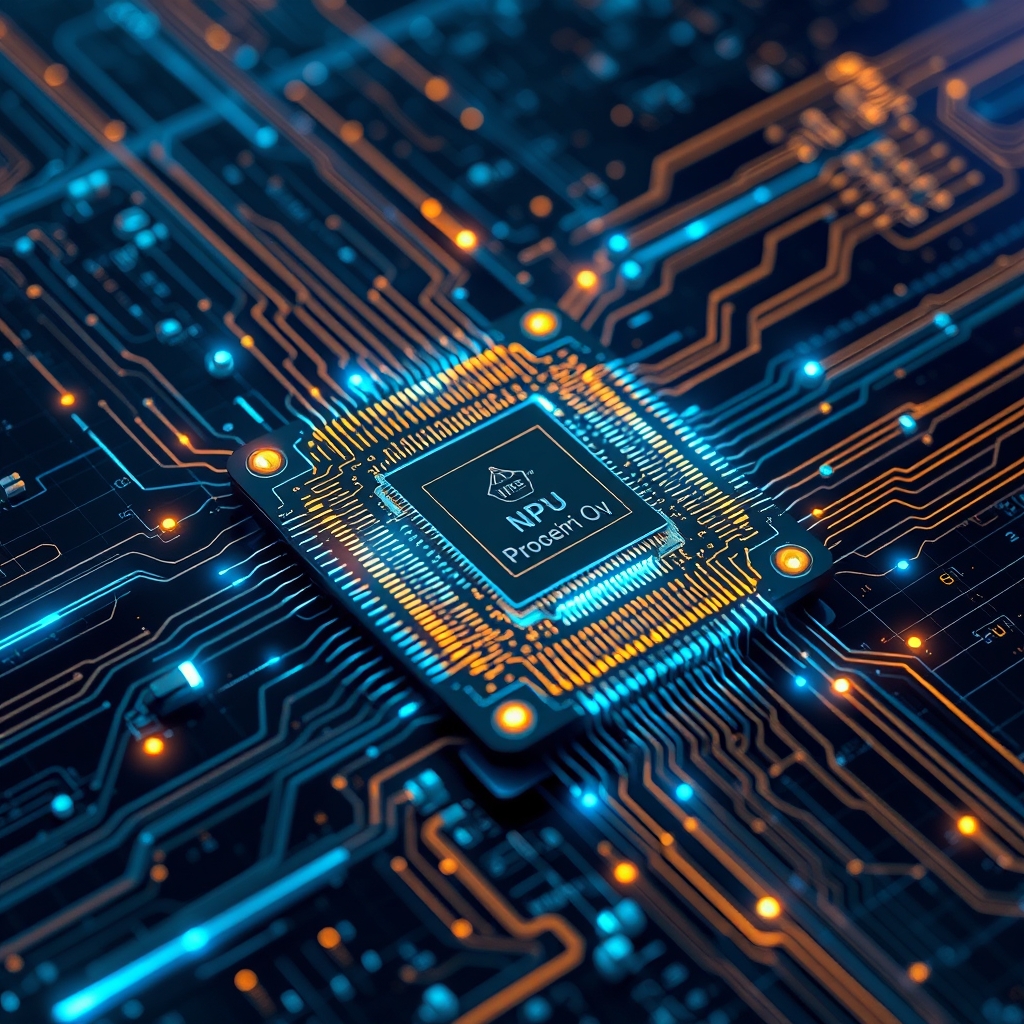
NPUs are engineered to excel at the types of operations that dominate AI workloads, particularly those involving deep learning and neural networks. Unlike CPUs, which are optimized for general-purpose tasks, or GPUs, which were originally designed for rendering graphics but later adapted for parallel computing, NPUs are purpose-built for matrix multiplications, convolutions, and other linear algebra operations that underpin machine learning models. This specialization allows NPUs to deliver superior performance per watt, a critical factor as AI applications become more pervasive.
The architecture of an NPU typically includes a high degree of parallelism, with thousands of small processing cores designed to handle multiple operations simultaneously. These cores are often arranged in a systolic array, a grid-like structure that enables efficient data flow and minimizes the need for data movement, which can be a significant bottleneck in AI computations. Additionally, NPUs incorporate on-chip memory and specialized data paths to further reduce latency and power consumption. This level of optimization is what sets NPUs apart from their more general-purpose counterparts.
How NPUs Differ from CPUs and GPUs
To understand the unique role of NPUs, it’s essential to compare them with CPUs and GPUs, the two most common types of processors in modern computing. CPUs are the jack-of-all-trades in computing, designed to handle a wide variety of tasks with low latency and high flexibility. They excel at sequential processing and are ideal for tasks that require complex decision-making, such as running operating systems or executing software applications. However, their general-purpose nature means they are not optimized for the highly parallel, repetitive computations that AI workloads demand.
GPUs, on the other hand, were originally developed to accelerate graphics rendering, which involves performing the same operation on large datasets—such as pixels in an image—simultaneously. This parallel processing capability made GPUs a natural fit for AI workloads, particularly training deep neural networks. However, while GPUs are significantly faster than CPUs for AI tasks, they are still not as energy-efficient as NPUs. GPUs consume more power and generate more heat, which can be a limiting factor in devices with constrained thermal and power budgets, such as smartphones or edge devices.
NPUs bridge this gap by combining the parallel processing power of GPUs with the energy efficiency of specialized hardware. They are designed to execute AI-specific operations with minimal overhead, making them ideal for inference tasks—where a trained model makes predictions or decisions based on new data. This focus on inference is particularly important as AI moves from data centers to edge devices, where real-time processing and low power consumption are critical.
Applications of NPUs: From Smartphones to Data Centers
The versatility of NPUs has led to their adoption across a wide range of applications, each with its own set of requirements and challenges. In smartphones, for example, NPUs are enabling features like real-time language translation, advanced photography enhancements, and voice assistants that can understand and respond to natural language. Companies like Apple, Qualcomm, and Huawei have integrated NPUs into their mobile processors, allowing AI tasks to be performed locally on the device rather than relying on cloud-based processing. This not only improves performance but also enhances privacy by keeping sensitive data on the device.
In data centers, NPUs are playing a crucial role in scaling AI infrastructure. Cloud providers like Google, Amazon, and Microsoft are deploying NPUs to accelerate machine learning workloads, from training large language models to running inference for applications like recommendation systems and fraud detection. The energy efficiency of NPUs is particularly valuable in data centers, where power consumption and cooling costs can be significant. By offloading AI tasks from CPUs and GPUs to NPUs, data centers can achieve higher throughput while reducing their environmental footprint.
Edge devices, which include everything from IoT sensors to autonomous vehicles, are another key area where NPUs are making an impact. These devices often operate in environments where connectivity is limited or unreliable, making local AI processing essential. NPUs enable edge devices to perform tasks like object detection, speech recognition, and predictive maintenance without needing to send data to the cloud. This not only reduces latency but also conserves bandwidth and improves security by minimizing data transmission.
Trends in NPU Design and Integration
As AI continues to evolve, so too does the design of NPUs. One of the most significant trends in NPU development is the move toward heterogeneous computing, where NPUs are integrated alongside CPUs and GPUs in a single system-on-chip (SoC). This approach allows each type of processor to handle the tasks it is best suited for, resulting in a more efficient and flexible computing platform. For example, a smartphone SoC might use the CPU for general tasks, the GPU for graphics rendering, and the NPU for AI inference, all while dynamically allocating resources based on the workload.
Another trend is the increasing focus on customization. Companies are developing NPUs tailored to specific AI workloads, such as natural language processing, computer vision, or reinforcement learning. This level of specialization allows for even greater performance and efficiency gains, as the hardware can be optimized for the unique characteristics of each workload. For instance, an NPU designed for computer vision might include dedicated hardware for image processing, while one optimized for natural language processing might prioritize memory bandwidth for handling large language models.
Finally, there is a growing emphasis on software optimization to fully leverage the capabilities of NPUs. Frameworks like TensorFlow, PyTorch, and ONNX are being updated to support NPU acceleration, making it easier for developers to deploy AI models on NPU-equipped devices. This software-hardware co-design is critical for unlocking the full potential of NPUs and ensuring that AI applications can run efficiently across a wide range of platforms.
The rise of NPUs marks a pivotal moment in the evolution of computing, where hardware is no longer a one-size-fits-all solution but a tailored tool designed to meet the specific needs of AI. As these specialized processors become more widespread, they will enable new applications and capabilities that were previously unimaginable, from real-time AI on mobile devices to autonomous systems that can operate in the most challenging environments. The future of computing is not just about doing things faster—it’s about doing them smarter, and NPUs are leading the way.