
TinyML Silicon: Powering the Next Generation of Ultra-Low-Power AI Devices
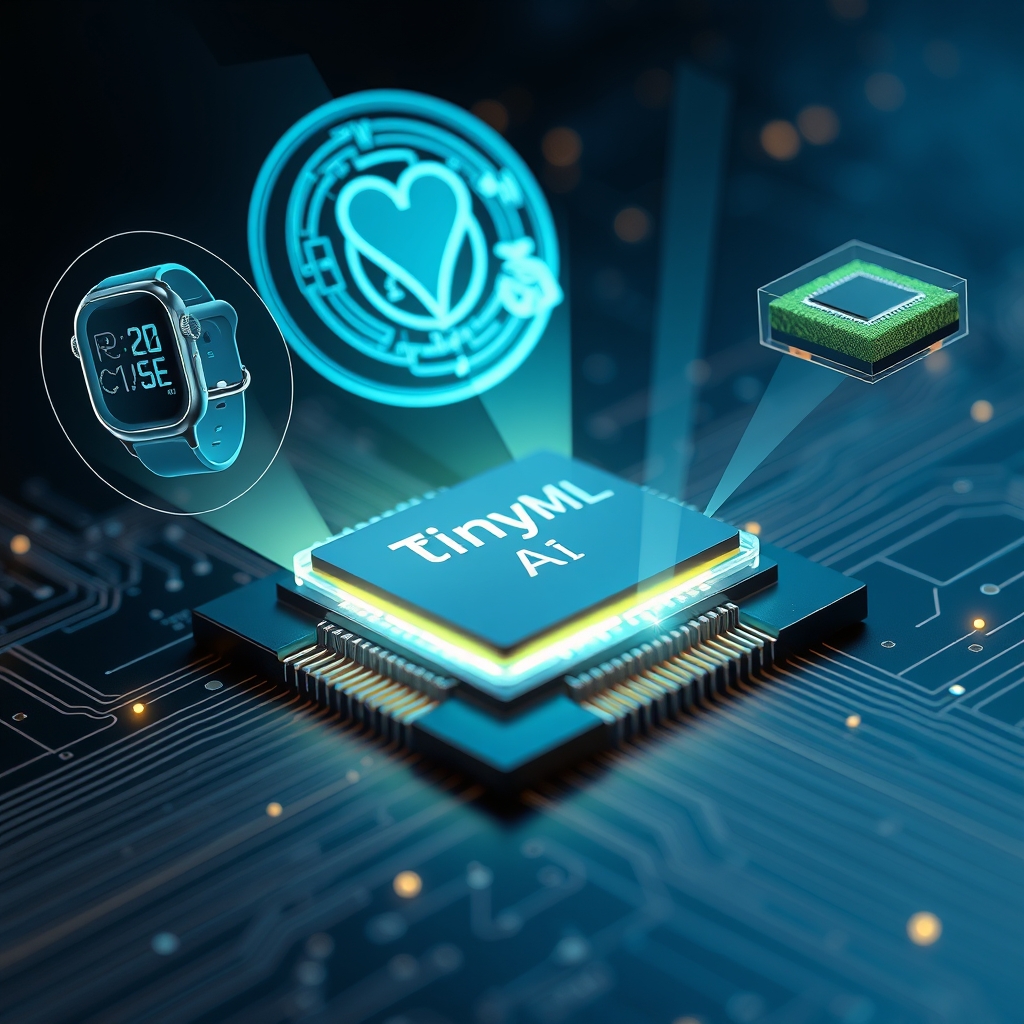
The relentless march of artificial intelligence (AI) into every corner of our lives has often been associated with powerful cloud servers, data centers humming with energy, and devices tethered to constant connectivity. Yet, a quieter revolution is underway—one that brings intelligence to the edge, where power is scarce, bandwidth is limited, and real-time decisions are critical. This revolution is being driven by Tiny Machine Learning (TinyML) silicon, a new breed of specialized hardware designed to run AI models on devices so small and efficient that they can operate for months—or even years—on a single battery charge.
The Birth of TinyML Silicon
TinyML is not just a scaled-down version of traditional machine learning; it is a fundamental rethinking of how AI can function in environments where resources are severely constrained. Traditional AI models, such as deep neural networks, often require significant computational power, memory, and energy—luxuries that devices like wearables, industrial sensors, or remote environmental monitors simply cannot afford. TinyML silicon addresses this challenge by integrating optimized processors, ultra-low-power memory, and specialized accelerators into compact, energy-efficient chips.
At the heart of this innovation lies the need for hardware that can perform complex tasks—like image recognition, natural language processing, or predictive maintenance—without draining power or relying on cloud connectivity. Companies like Arm, Qualcomm, and startups such as Syntiant and GreenWaves Technologies are leading the charge, developing silicon that can execute AI workloads with microwatts of power, rather than the watts or kilowatts consumed by traditional systems. These chips are not just smaller; they are smarter, leveraging techniques like quantization, pruning, and hardware-aware model optimization to squeeze every ounce of performance out of limited resources.
Use Cases: Where TinyML Silicon Shines
The applications of TinyML silicon are as diverse as they are transformative, spanning industries and use cases that were once thought impossible for AI to penetrate. Here are a few areas where this technology is making a tangible impact:
Wearables and Health Monitoring
Wearable devices, such as smartwatches and fitness trackers, have become ubiquitous, but their potential has been limited by battery life and the need for frequent recharging. TinyML silicon is changing that by enabling these devices to run sophisticated AI models locally, without offloading data to the cloud. For example, a smartwatch equipped with TinyML can continuously monitor a user’s heart rate, detect irregularities like atrial fibrillation, and even predict potential health issues before they become critical—all while consuming minimal power. This not only extends battery life but also enhances privacy, as sensitive health data remains on the device rather than being transmitted to external servers.
Industrial Sensors and Predictive Maintenance
In industrial settings, sensors play a crucial role in monitoring equipment health, detecting anomalies, and preventing costly downtime. However, traditional sensors often rely on periodic data transmission to central systems for analysis, which can introduce latency and increase energy consumption. TinyML silicon allows these sensors to become intelligent, analyzing data in real-time to predict failures before they occur. For instance, a vibration sensor on a factory machine can use TinyML to detect subtle changes in patterns that indicate wear and tear, triggering maintenance alerts without needing to send raw data to the cloud. This not only reduces energy usage but also minimizes downtime and maintenance costs.
Environmental Monitoring and Smart Agriculture
In remote or off-grid locations, such as forests, oceans, or farmlands, power and connectivity are often scarce. TinyML silicon enables the deployment of intelligent sensors that can operate autonomously for extended periods, collecting and analyzing data on air quality, soil moisture, wildlife activity, or crop health. For example, a TinyML-powered sensor in a vineyard can monitor temperature, humidity, and soil conditions, using AI to predict the optimal time for irrigation or pest control. These devices can run on solar power or small batteries, making them ideal for large-scale, low-maintenance deployments that were previously impractical.
Innovations in Energy Efficiency
The magic of TinyML silicon lies in its ability to deliver AI capabilities without the energy overhead of traditional systems. Several key innovations are making this possible:
Hardware-Aware Model Optimization
TinyML models are not just smaller versions of their cloud-based counterparts; they are meticulously optimized for the hardware they run on. Techniques like quantization—reducing the precision of numerical values in a model—can significantly cut memory usage and computational demands without sacrificing accuracy. Similarly, pruning removes unnecessary neurons or layers from a neural network, further reducing its size and energy footprint. These optimizations ensure that TinyML models can run efficiently on devices with limited processing power and memory.
Ultra-Low-Power Processors and Accelerators
Traditional CPUs and GPUs are ill-suited for TinyML applications due to their high power consumption. Instead, TinyML silicon often incorporates specialized processors, such as microcontroller units (MCUs) with built-in neural network accelerators. These accelerators are designed to handle the specific computations required for AI workloads, such as matrix multiplications, with minimal energy use. For example, Arm’s Cortex-M series of MCUs and Qualcomm’s QCS6490 chipset are engineered to deliver AI performance at microwatt power levels, making them ideal for battery-powered devices.
Event-Driven Computing
One of the most effective ways to conserve energy in TinyML devices is to ensure they only consume power when necessary. Event-driven computing achieves this by putting the device into a low-power sleep mode until a specific trigger—such as a sound, motion, or environmental change—activates the AI model. For instance, a TinyML-powered security camera might remain dormant until it detects movement, at which point it wakes up, processes the image, and sends an alert if an intruder is detected. This approach can extend battery life from days to years, depending on the use case.
Edge-to-Cloud Synergy
While TinyML silicon excels at running AI models locally, it doesn’t operate in isolation. Many applications leverage a hybrid approach, where the device handles real-time, low-latency tasks, while more complex or resource-intensive analyses are offloaded to the cloud. For example, a TinyML-enabled drone might use on-device AI to navigate obstacles in real-time, while periodically sending data to the cloud for more detailed analysis or model updates. This synergy allows TinyML devices to remain lightweight and energy-efficient while still benefiting from the scalability and power of cloud-based AI.
The rise of TinyML silicon is not just a technological advancement; it is a paradigm shift in how we think about AI. By bringing intelligence to the edge, this technology is unlocking new possibilities for devices that are smaller, smarter, and more sustainable than ever before. From wearables that monitor our health with unprecedented precision to industrial sensors that predict failures before they happen, TinyML is transforming industries and improving lives in ways we are only beginning to imagine. As the hardware continues to evolve, the boundaries of what’s possible will expand even further, ushering in an era where AI is not just powerful, but also pervasive, efficient, and accessible to all.