Edge AI: Revolutionizing Real-Time Decision-Making in Embedded Systems
In an era where data is generated at an unprecedented scale, the ability to process and act on information instantaneously has become a game-changer for industries worldwide. Edge AI, the deployment of artificial intelligence algorithms directly on local devices rather than relying on cloud-based systems, is at the forefront of this transformation. By bringing computation closer to the data source, Edge AI is not only reducing latency but also enhancing privacy, security, and efficiency across a multitude of applications. From smart factories to autonomous vehicles, this technology is redefining what’s possible in real-time decision-making.
The Rise of Edge AI: Why Now?
The exponential growth of the Internet of Things (IoT) has led to an explosion of connected devices, each generating vast amounts of data. Traditional cloud computing models, where data is sent to remote servers for processing, often struggle with latency, bandwidth limitations, and privacy concerns. Edge AI addresses these challenges by performing computations locally, on the device itself or on nearby edge servers. This shift is driven by several key factors:
1. The Need for Speed
In applications like autonomous driving or industrial automation, even a millisecond delay can have critical consequences. Edge AI enables real-time processing, allowing systems to make split-second decisions without the lag introduced by cloud communication. For example, a self-driving car must instantly recognize pedestrians, traffic signs, and obstacles—tasks that are far more efficient when handled locally rather than waiting for a cloud response.
2. Enhanced Privacy and Security
Sending sensitive data to the cloud raises significant privacy and security concerns, particularly in industries like healthcare or finance. Edge AI mitigates these risks by keeping data localized, reducing exposure to potential breaches. In healthcare, for instance, patient monitoring devices can analyze vital signs on-site, transmitting only anonymized insights to healthcare providers rather than raw, personally identifiable data.
3. Bandwidth and Cost Efficiency
Transmitting large volumes of data to the cloud can be costly and bandwidth-intensive. Edge AI alleviates this burden by filtering and processing data at the source, sending only relevant information to the cloud. This not only reduces operational costs but also optimizes network usage, making it a scalable solution for industries with thousands of connected devices.
Transforming Industries with Edge AI
The applications of Edge AI are as diverse as they are impactful, spanning industries that rely on real-time data processing and intelligent automation. Here are some of the most transformative use cases:
1. Autonomous Vehicles: Driving the Future
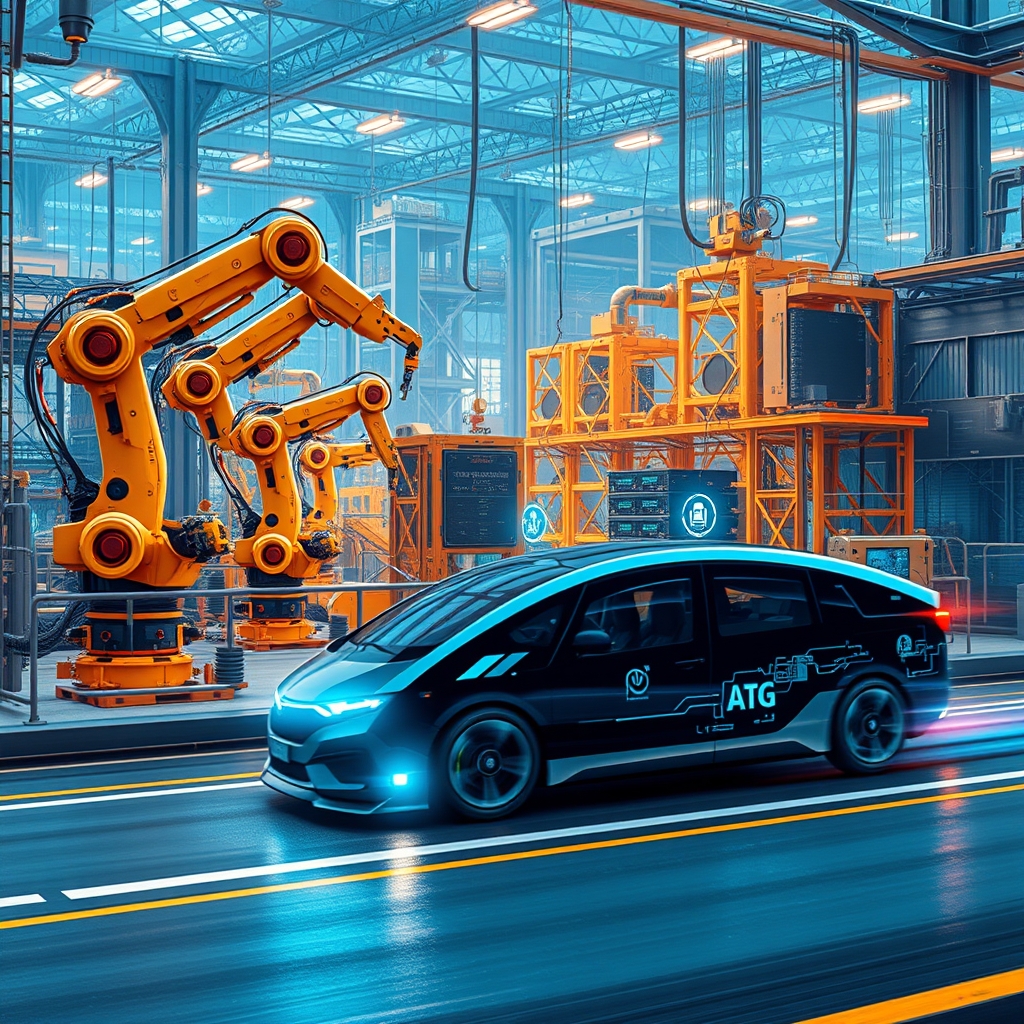
Autonomous vehicles are perhaps the most high-profile example of Edge AI in action. These vehicles generate terabytes of data per hour from sensors like LiDAR, cameras, and radar. Processing this data in real-time is essential for safe navigation, obstacle avoidance, and decision-making. Edge AI enables vehicles to interpret their surroundings instantaneously, reducing reliance on cloud connectivity and improving response times. Companies like Tesla and Waymo are leveraging Edge AI to push the boundaries of what’s possible in autonomous driving, making roads safer and more efficient.
2. Smart Manufacturing: The Factory of Tomorrow
In smart manufacturing, Edge AI is revolutionizing production lines by enabling predictive maintenance, quality control, and adaptive automation. Machines equipped with AI-powered sensors can detect anomalies in real-time, preventing costly downtime and reducing waste. For example, a robotic arm in an automotive factory can adjust its movements on the fly to correct defects, ensuring consistent product quality. Edge AI also facilitates the integration of digital twins—virtual replicas of physical systems—that allow manufacturers to simulate and optimize processes before implementing them in the real world.
3. Healthcare: Personalized and Proactive Care
The healthcare industry is embracing Edge AI to deliver more personalized and proactive care. Wearable devices, such as smartwatches and ECG monitors, can analyze biometric data locally to detect irregularities like arrhythmias or falls. This enables immediate alerts to patients and healthcare providers, potentially saving lives. Edge AI is also being used in hospitals to monitor patient vitals in real-time, reducing the burden on medical staff and improving patient outcomes. By keeping data localized, Edge AI ensures compliance with stringent healthcare regulations like HIPAA, while still enabling advanced analytics.
4. Retail: Enhancing Customer Experiences
In retail, Edge AI is transforming the way businesses interact with customers. Smart shelves equipped with computer vision can track inventory levels in real-time, alerting staff when restocking is needed. AI-powered cameras can analyze customer behavior, providing insights into shopping patterns and preferences. This data can be used to personalize marketing efforts, optimize store layouts, and even prevent theft. By processing data locally, retailers can reduce latency and deliver seamless, personalized experiences that drive customer loyalty.
Overcoming the Challenges of Edge AI
While the benefits of Edge AI are undeniable, its adoption is not without challenges. Deploying AI models on resource-constrained devices requires careful optimization to balance performance, power efficiency, and accuracy. Here are some of the key hurdles and how industries are addressing them:
1. Power Efficiency
Edge devices, particularly those in remote or mobile environments, often operate on limited power sources like batteries. Running complex AI models on such devices can quickly drain power, limiting their usability. To address this, developers are turning to techniques like model quantization, which reduces the precision of model weights to minimize computational requirements. Additionally, hardware advancements, such as specialized AI chips like NVIDIA’s Jetson or Google’s Edge TPU, are designed to deliver high performance with low power consumption.
2. Model Optimization
AI models trained for cloud environments are often too large and resource-intensive for edge deployment. To overcome this, developers employ techniques like model pruning, which removes unnecessary neurons from neural networks, and knowledge distillation, where a smaller model is trained to mimic the behavior of a larger one. These methods help reduce model size and computational demands without significantly compromising accuracy.
3. Security and Robustness
Edge devices are often deployed in uncontrolled environments, making them vulnerable to physical tampering or cyberattacks. Ensuring the security and robustness of Edge AI systems is critical, particularly in applications like autonomous vehicles or medical devices. Techniques like federated learning, where models are trained across multiple devices without sharing raw data, can enhance privacy and security. Additionally, hardware-based security features, such as secure enclaves, can protect sensitive data and AI models from unauthorized access.
4. Scalability and Management
Managing thousands of Edge AI devices across diverse locations can be a logistical nightmare. Ensuring consistent performance, updates, and monitoring requires robust management tools and frameworks. Companies are increasingly turning to edge orchestration platforms, which provide centralized control over distributed edge devices. These platforms enable remote deployment, monitoring, and updates, ensuring that Edge AI systems remain efficient and up-to-date.
As Edge AI continues to evolve, it is poised to become a cornerstone of the next industrial revolution. By enabling real-time decision-making, enhancing privacy, and reducing reliance on cloud infrastructure, Edge AI is unlocking new possibilities across industries. From autonomous vehicles navigating city streets to smart factories optimizing production lines, the impact of this technology is already being felt. The journey is not without its challenges, but with ongoing advancements in hardware, software, and AI optimization, Edge AI is set to redefine the boundaries of what’s possible in embedded systems. The future of intelligent, decentralized computing is here, and it’s happening at the edge.