The Silent Revolution: How Agentic AI is Transforming Precision Agriculture
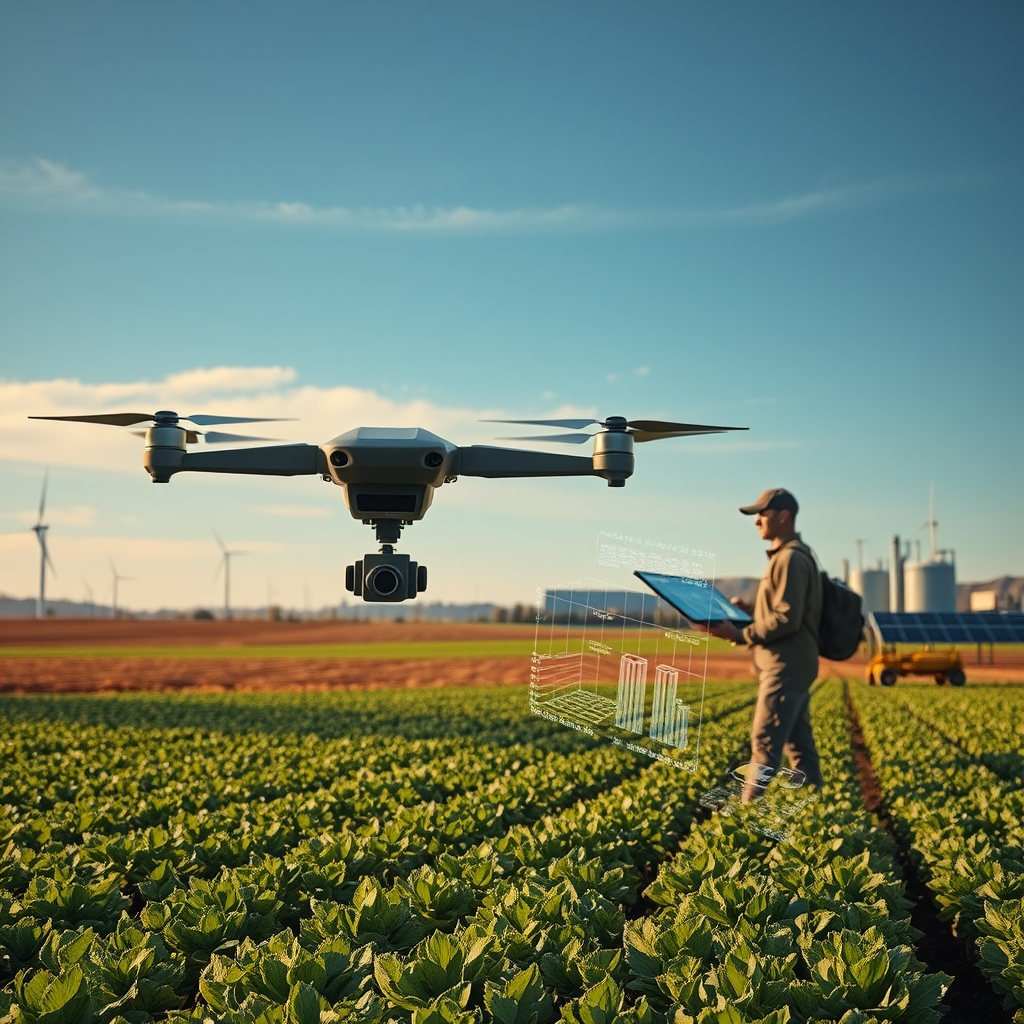
In the vast, undulating fields that stretch beyond the horizon, a quiet revolution is underway. It is not marked by the clamor of machinery or the shouts of laborers but by the subtle hum of drones, the flicker of sensors, and the invisible threads of data weaving through the soil. This is the era of precision agriculture, where every seed, every drop of water, and every ray of sunlight is accounted for, optimized, and harnessed with unprecedented efficiency. At the heart of this transformation lies Agentic AI—a paradigm shift in how artificial intelligence operates, not as a passive tool, but as an autonomous, decision-making entity embedded within the very fabric of modern farming.
The Rise of Agentic AI in Agriculture
Agentic AI represents a leap beyond traditional AI systems. Unlike conventional models that rely on human input to execute tasks, agentic AI systems are designed to perceive their environment, make decisions, and act independently to achieve specific goals. In precision agriculture, this means AI agents can monitor crop health, predict weather patterns, optimize irrigation schedules, and even manage pest control—all without constant human oversight. These systems are not just reactive; they are proactive, learning from data and adapting their strategies in real time to maximize yield and minimize waste.
The integration of agentic AI into agriculture is driven by the pressing need for sustainability. With the global population projected to reach nearly 10 billion by 2050, the demand for food will surge by 60%. Traditional farming methods, which often rely on broad-spectrum approaches, are ill-equipped to meet this demand without exacerbating environmental degradation. Agentic AI offers a solution by enabling hyper-localized interventions. For instance, instead of uniformly applying water or fertilizers across a field, AI agents can analyze soil moisture levels, nutrient content, and plant health to deliver resources only where and when they are needed.
Multispectral Imaging: The Eyes of Agentic AI
One of the most powerful tools in the agentic AI arsenal is multispectral imaging. Unlike standard cameras that capture visible light, multispectral sensors can detect a range of wavelengths, including those invisible to the human eye. This technology allows AI agents to assess crop health with remarkable precision. For example, stressed plants often reflect light differently in the near-infrared spectrum, a signal that multispectral imaging can detect long before visible symptoms appear. By analyzing these subtle changes, agentic AI can identify issues such as nutrient deficiencies, disease outbreaks, or water stress, enabling farmers to take corrective action before yields are compromised.
Multispectral imaging is not just about early detection; it is also about continuous monitoring. Drones equipped with these sensors can survey vast fields in a fraction of the time it would take human scouts, providing real-time data that AI agents use to adjust farming practices dynamically. This level of granularity ensures that resources are used efficiently, reducing costs and environmental impact. Moreover, the data collected over time creates a rich repository of insights, allowing AI agents to refine their models and improve predictions with each growing season.
Edge Computing: Bringing Intelligence to the Field
The effectiveness of agentic AI in precision agriculture hinges on its ability to process data quickly and reliably. This is where edge computing comes into play. Traditional cloud computing, while powerful, introduces latency and relies on stable internet connectivity—two factors that are not always guaranteed in rural farming areas. Edge computing addresses these challenges by bringing computational power closer to the source of data. Instead of sending information to a distant server for analysis, edge devices process data locally, enabling real-time decision-making.
In practice, edge computing allows AI agents to operate autonomously even in remote fields. For example, a smart irrigation system powered by edge computing can adjust water flow based on real-time soil moisture data, without waiting for instructions from a central server. This not only improves efficiency but also reduces the risk of crop loss due to delayed responses. Furthermore, edge computing enhances data security by minimizing the need to transmit sensitive information over the internet, a critical consideration for farmers who rely on proprietary data to maintain a competitive edge.
The Synergy of Sustainable Energy and AI
Precision agriculture powered by agentic AI is not just about increasing yields; it is also about doing so sustainably. The environmental footprint of farming is a growing concern, with agriculture accounting for nearly a quarter of global greenhouse gas emissions. To address this, farmers are turning to sustainable energy solutions that integrate seamlessly with AI-driven systems. Solar-powered drones, for instance, can operate indefinitely in the field, collecting data and executing tasks without relying on fossil fuels. Similarly, AI agents can optimize the use of renewable energy sources, such as wind or biogas, to power farm operations, reducing reliance on non-renewable resources.
One of the most promising developments in this space is the use of green hydrogen as a clean energy source for agricultural machinery. Green hydrogen, produced through the electrolysis of water using renewable energy, emits only water vapor when used as fuel. AI agents can manage the production and distribution of green hydrogen on farms, ensuring that energy is available when and where it is needed most. This not only reduces emissions but also lowers operational costs, making sustainable farming more economically viable.
Biogas Electrolysis: Closing the Loop on Farm Waste
Another innovative application of sustainable energy in precision agriculture is biogas electrolysis. Farms generate significant amounts of organic waste, from crop residues to animal manure, which can be converted into biogas through anaerobic digestion. Traditionally, biogas has been used to generate electricity or heat, but with the advent of electrolysis, it can now be transformed into green hydrogen. This process not only provides a clean energy source but also helps farmers manage waste more effectively, turning a potential environmental liability into a valuable asset.
Agentic AI plays a crucial role in optimizing biogas electrolysis systems. By monitoring the composition of biogas and the efficiency of the electrolysis process, AI agents can adjust parameters in real time to maximize hydrogen production. This ensures that the system operates at peak efficiency, reducing energy waste and lowering costs. Moreover, AI can integrate biogas electrolysis with other farm operations, such as irrigation or machinery fueling, creating a closed-loop system where waste is minimized, and resources are fully utilized.
The fields of tomorrow are not just places of cultivation; they are dynamic, data-driven ecosystems where every element is interconnected and optimized for sustainability. Agentic AI is the invisible hand guiding this transformation, turning the age-old practice of farming into a high-tech, high-efficiency endeavor. As these technologies continue to evolve, they promise not only to feed the world but to do so in a way that preserves the planet for future generations. The silent revolution in the fields is just beginning, and its impact will ripple far beyond the boundaries of agriculture, shaping a future where technology and nature coexist in harmony.