
The Silent Revolution: How Agentic AI and Neuromorphic Chips Are Cultivating the Future of Precision Agriculture
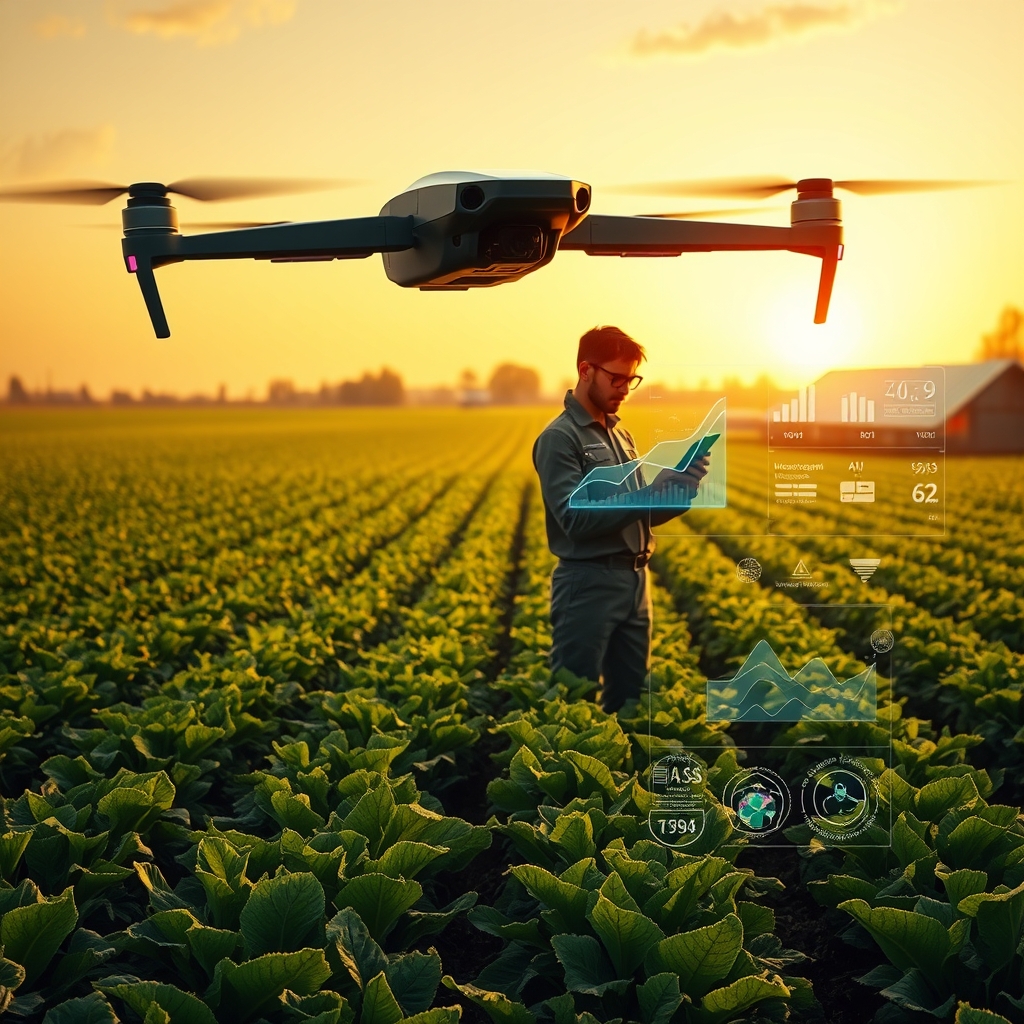
The golden fields stretch endlessly under the midday sun, a patchwork of emerald and amber that has fed civilizations for millennia. Yet beneath this timeless landscape, a quiet revolution is unfolding—one where the rustle of leaves and the whisper of the wind are now accompanied by the hum of innovation. Precision agriculture, once a distant dream of farmers and technologists, is becoming a tangible reality, driven by the convergence of Agentic AI and neuromorphic chips. Together, they are not just transforming how we grow food but redefining the very essence of farming itself.
The Brain of the Field: Agentic AI in Agriculture
Agentic AI is not your typical artificial intelligence. Unlike conventional systems that rely on rigid, pre-programmed rules, agentic AI operates with a degree of autonomy, making decisions in real-time based on a dynamic understanding of its environment. Imagine a fleet of drones, not merely following a script, but adapting to the nuances of a field—adjusting irrigation patterns, identifying pests before they become infestations, or even predicting yield fluctuations with uncanny accuracy. This is the promise of agentic AI in precision agriculture.
The technology thrives on data, and in modern farming, data is abundant. Sensors embedded in the soil measure moisture levels, drones equipped with multispectral imaging capture the health of crops in wavelengths invisible to the human eye, and satellites track weather patterns with precision. Agentic AI sifts through this deluge of information, identifying patterns and making decisions that would take human farmers days or weeks to process. It’s like giving the field a voice, one that speaks in the language of efficiency, sustainability, and resilience.
The Neuromorphic Advantage: Mimicking the Human Brain
While agentic AI provides the decision-making framework, neuromorphic chips offer the hardware to make it all possible. These chips, inspired by the architecture of the human brain, are designed to process information in a way that is both energy-efficient and lightning-fast. Traditional computing relies on separating memory and processing, a bottleneck that neuromorphic chips eliminate by integrating the two. The result? A system that can learn, adapt, and respond to stimuli in real-time, much like a farmer’s intuition—but with the precision of a machine.
In the context of precision agriculture, neuromorphic chips enable edge computing at an unprecedented scale. Instead of sending data to a distant cloud for processing, these chips analyze information on-site, reducing latency and allowing for immediate action. A drone equipped with a neuromorphic chip can detect a nutrient deficiency in a crop, adjust its flight path to apply fertilizer precisely where it’s needed, and do so without ever leaving the field. It’s a level of responsiveness that was once the stuff of science fiction but is now within reach.
From Soil to Sky: The Tools of the Trade
The marriage of agentic AI and neuromorphic chips is only part of the story. The tools they power are equally transformative. Multispectral imaging, for instance, allows farmers to see beyond the visible spectrum, revealing stress in crops long before it becomes apparent to the naked eye. By analyzing the reflectance of light at different wavelengths, these systems can detect everything from water stress to disease outbreaks, enabling targeted interventions that save time, resources, and harvests.
Then there are the drones themselves, no longer just flying cameras but autonomous agents capable of executing complex tasks. Equipped with thermal imaging and advanced sensors, they can monitor livestock, map fields, and even plant seeds with surgical precision. And with the integration of edge computing, these drones can operate independently, making split-second decisions without relying on a central server. The result is a farming operation that is not just automated but truly intelligent.
The Sustainable Harvest: A Greener Future
At its core, the revolution in precision agriculture is about more than just efficiency—it’s about sustainability. Traditional farming methods often rely on broad-stroke applications of water, fertilizer, and pesticides, leading to waste and environmental degradation. Agentic AI and neuromorphic chips, however, enable a more nuanced approach. By targeting inputs only where they’re needed, these technologies reduce runoff, conserve water, and minimize the use of chemicals. The result is a farming system that is not only more productive but also kinder to the planet.
Consider the potential of biogas electrolysis, a process that converts organic waste into hydrogen fuel. When paired with agentic AI, this technology could transform farms into self-sustaining energy hubs, where waste from crops and livestock is repurposed into clean energy. The hydrogen produced could power farm equipment, reducing reliance on fossil fuels and further shrinking the carbon footprint of agriculture. It’s a closed-loop system where every byproduct has value, and nothing goes to waste.
The Challenges Ahead: Navigating the New Frontier
For all its promise, the integration of agentic AI and neuromorphic chips into agriculture is not without challenges. The technology is still in its infancy, and questions remain about scalability, cost, and accessibility. Small-scale farmers, in particular, may struggle to adopt these advanced systems, raising concerns about a digital divide in agriculture. Additionally, the ethical implications of autonomous decision-making in farming—such as who is responsible when things go wrong—are still being explored.
There’s also the matter of data privacy. As farms become more connected, they also become more vulnerable to cyber threats. Protecting the vast amounts of data generated by precision agriculture systems will require robust security measures, including advancements in quantum cryptography to safeguard sensitive information. The stakes are high, but so are the rewards.
The fields of tomorrow are being shaped today, not by the plow and the tractor alone, but by the silent algorithms and brain-like chips that hum beneath the soil and soar above the crops. This is not just a technological evolution—it’s a fundamental shift in how we interact with the land, one that promises to feed a growing population while preserving the planet for future generations. The tools are here, the vision is clear, and the harvest, it seems, is just beginning.