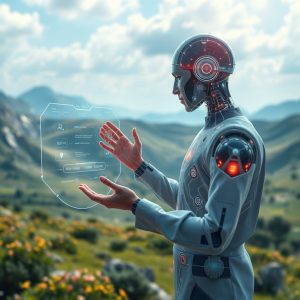
The Silent Revolution: How Agentic AI is Transforming Precision Agriculture
In the vast, undulating fields that stretch across the heartlands of the world, a quiet revolution is underway. It is not marked by the clamor of machinery or the shouts of laborers, but by the subtle hum of drones, the flicker of sensors, and the invisible dance of data flowing through the air. At the heart of this transformation lies Agentic AI, a paradigm shift in artificial intelligence that is redefining the boundaries of what is possible in precision agriculture. Unlike traditional AI, which operates within rigid, pre-defined parameters, Agentic AI systems are autonomous, adaptive, and capable of making complex decisions in real-time. They are not just tools; they are partners in the pursuit of a more sustainable, efficient, and productive agricultural future.
The Dawn of Agentic AI in Farming
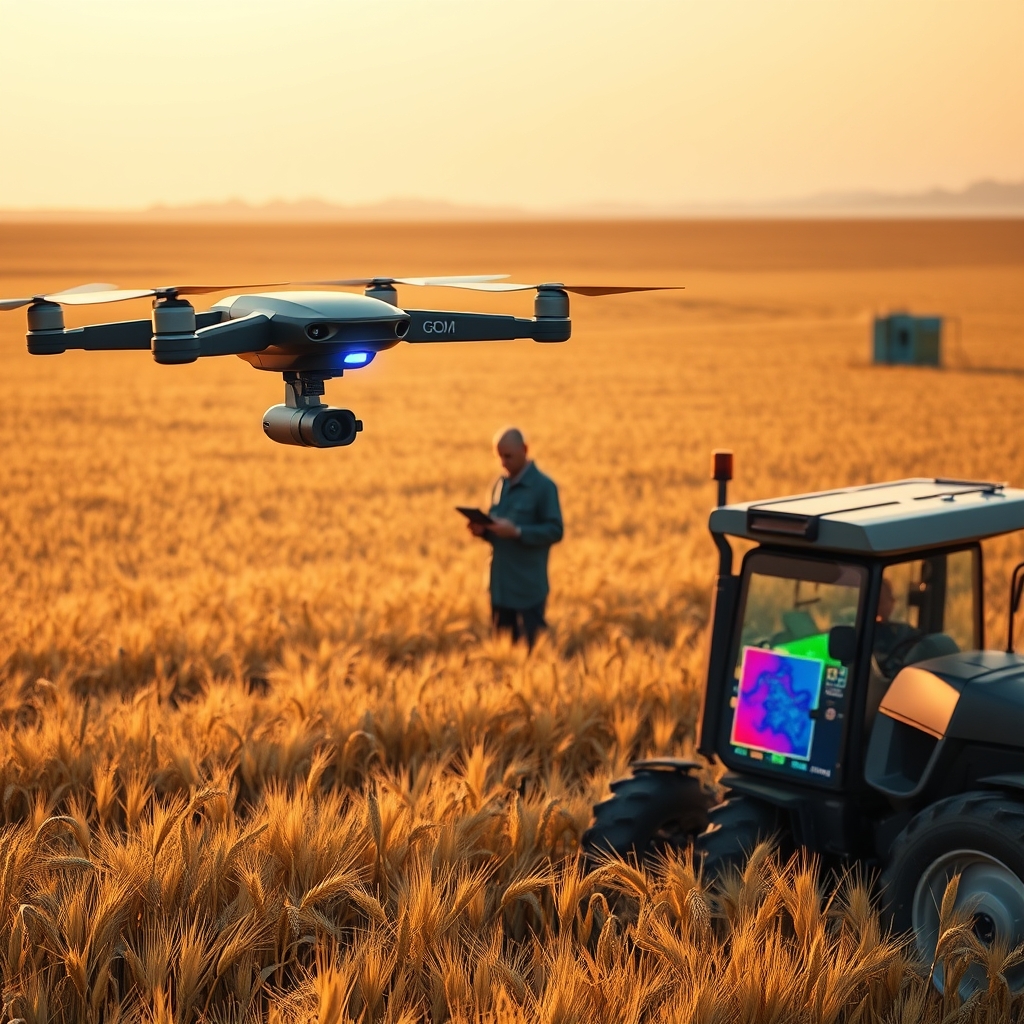
Agentic AI represents a leap forward from conventional AI applications in agriculture. Where earlier systems relied on static algorithms to analyze data—such as soil moisture levels or crop health—Agentic AI systems are dynamic. They learn, evolve, and act independently, often collaborating with other AI agents to optimize outcomes. For instance, an Agentic AI system might detect an early sign of pest infestation in a corner of a field using multispectral imaging from a drone. Instead of merely alerting a farmer, it could autonomously deploy a targeted response, such as releasing beneficial insects or adjusting irrigation patterns to deter the pests, all while coordinating with other AI agents managing adjacent fields.
This level of autonomy is made possible by advances in edge computing, which allows data to be processed locally, reducing latency and enabling real-time decision-making. Edge computing devices, often no larger than a smartphone, are embedded in fields, tractors, and even livestock collars, creating a network of intelligent nodes that feed into the larger Agentic AI ecosystem. The result is a farming operation that is not just reactive but predictive, capable of anticipating challenges before they arise.
Multispectral Imaging: The Eyes of the Future
One of the most powerful tools in the Agentic AI arsenal is multispectral imaging. Unlike traditional cameras that capture only visible light, multispectral sensors can detect a range of wavelengths, from ultraviolet to infrared. This capability allows farmers to see what the naked eye cannot: the subtle variations in plant health, soil composition, and water stress that are invisible in the visible spectrum.
For example, a multispectral image of a wheat field might reveal patches where chlorophyll levels are declining, indicating the early stages of disease or nutrient deficiency. An Agentic AI system can analyze this data in real-time, cross-referencing it with historical patterns, weather forecasts, and even genetic information about the crop variety. It can then recommend—or autonomously implement—corrective actions, such as adjusting fertilizer application or scheduling a targeted pesticide treatment. The precision of these interventions minimizes waste, reduces environmental impact, and maximizes yield, all while lowering costs for farmers.
The Role of Hybrid Powertrains and Sustainable Energy
As Agentic AI systems become more integrated into farming operations, the demand for reliable, sustainable energy sources grows. Traditional fossil fuel-powered machinery is not only environmentally harmful but also ill-suited to the needs of a data-driven, AI-enabled farm. Enter hybrid powertrains and sustainable energy solutions, which are increasingly powering the next generation of agricultural equipment.
Hybrid powertrains combine electric motors with traditional engines, reducing fuel consumption and emissions while maintaining the power needed for heavy-duty tasks like plowing or harvesting. These systems are often paired with renewable energy sources, such as solar panels or wind turbines, to create a self-sustaining energy ecosystem. In some cases, farms are even exploring green hydrogen as a fuel source, produced through biogas electrolysis or other renewable methods. The hydrogen can be stored and used to power fuel cells, providing a clean, efficient energy solution for both machinery and on-site data centers.
The synergy between Agentic AI and sustainable energy is particularly evident in autonomous farming equipment. Electric tractors and harvesters, guided by AI, can operate around the clock, optimizing their energy use based on real-time data. For instance, an AI system might determine that a field needs to be irrigated during off-peak energy hours to take advantage of lower electricity rates, or it might adjust the speed of a harvester to minimize energy consumption without sacrificing efficiency. These small optimizations add up, creating a farming operation that is not only more productive but also more sustainable.
Beyond the Field: The Broader Implications of Agentic AI
The impact of Agentic AI extends far beyond the boundaries of individual farms. As these systems become more widespread, they are reshaping the entire agricultural supply chain, from seed production to food distribution. For example, AI-driven semiconductor lithography is enabling the creation of more efficient sensors and processors, which in turn power the next generation of agricultural technology. Meanwhile, quantum cryptography is being explored as a way to secure the vast amounts of data generated by AI-enabled farms, ensuring that sensitive information—such as crop yields or soil data—remains protected from cyber threats.
In the realm of food security, Agentic AI is playing a critical role in addressing some of the most pressing challenges of our time. Climate change, population growth, and resource scarcity are putting unprecedented pressure on global food systems. Agentic AI offers a way to meet these challenges head-on, by enabling farmers to produce more with less. For instance, AI-driven thermal imaging can help identify water stress in crops, allowing for more efficient irrigation. Similarly, neuromorphic chips, which mimic the structure of the human brain, are being used to create more energy-efficient AI systems that can operate in remote or off-grid locations.
The Human Element: Collaboration, Not Replacement
Despite the advanced technology at play, the human element remains central to the success of Agentic AI in agriculture. Farmers are not being replaced by machines; rather, they are being empowered by them. AI systems handle the data-heavy, repetitive tasks—such as monitoring soil conditions or tracking livestock—freeing farmers to focus on higher-level decision-making and innovation. This collaboration between human and machine is creating a new kind of farming, one that is as much about data science as it is about traditional agricultural knowledge.
Moreover, Agentic AI is democratizing access to advanced farming techniques. Smallholder farmers, who often lack the resources to invest in expensive technology, can now leverage AI-driven tools through cloud-based platforms or shared equipment. For example, a cooperative of farmers might pool their resources to purchase a fleet of AI-enabled drones, which can then be used to monitor crops across multiple farms. This kind of collaboration not only reduces costs but also fosters a sense of community and shared purpose among farmers.
The fields of tomorrow are being shaped today by the invisible hand of Agentic AI. As these systems continue to evolve, they will unlock new possibilities for precision, sustainability, and efficiency in agriculture. The technology is not without its challenges—data privacy, ethical considerations, and the digital divide are all issues that must be addressed—but the potential is undeniable. In a world where every resource counts, Agentic AI is not just a tool; it is a beacon of hope for a future where food is abundant, farms are sustainable, and the land is nurtured with the care and intelligence it deserves. The revolution may be silent, but its impact will echo for generations to come.