The Silent Revolution: How Swarm Intelligence is Rewriting the Future of Autonomous Systems
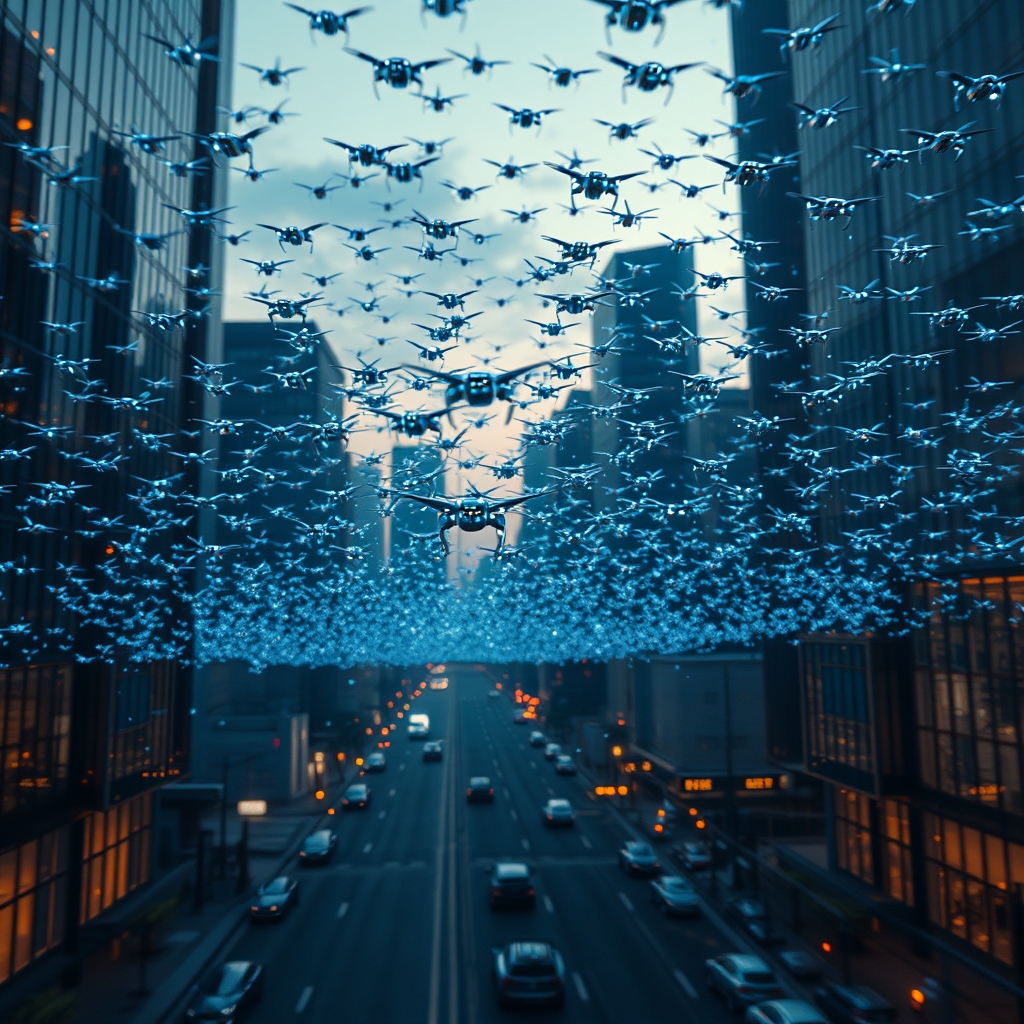
Imagine a world where machines don’t just follow instructions—they collaborate, adapt, and evolve like a murmuration of starlings painting the sky with fluid, unpredictable grace. This is not the stuff of science fiction; it is the quiet, relentless rise of swarm intelligence, a paradigm where decentralized, self-organizing systems mimic the collective genius of nature to solve problems no single entity could tackle alone. From the depths of the ocean to the vast expanse of outer space, swarm intelligence is reshaping what we thought possible in autonomous systems, and its implications are as profound as they are exhilarating.
The Wisdom of the Many: Nature’s Blueprint for Machine Intelligence
At its core, swarm intelligence draws inspiration from the natural world, where simple creatures—ants, bees, fish, birds—achieve extraordinary feats through collaboration. An ant colony, for instance, doesn’t have a central command; instead, each ant follows local rules, and from these interactions emerges a complex, efficient system capable of foraging, nest-building, and even waging war. This bio-inspired computing approach is now being harnessed to create machines that think, learn, and act as a unified collective.
In the realm of robotics, swarm intelligence is breaking free from the limitations of traditional, top-down control. Researchers at Harvard have developed the Kilobot swarm, a thousand tiny robots that self-assemble into shapes, navigate obstacles, and even repair themselves when damaged. There’s no leader, no single point of failure—just a harmonious dance of simple agents working toward a common goal. This is the power of decentralized decision-making, where resilience and adaptability are baked into the system’s DNA.
From the Lab to the Real World: Where Swarm Intelligence is Making Waves
The applications of swarm intelligence are as diverse as they are transformative. In disaster response, swarms of drones can map collapsed buildings, locate survivors, and deliver supplies with a speed and precision no human team could match. During the 2023 Turkey-Syria earthquake, researchers tested swarm-based search-and-rescue systems that could navigate rubble-strewn environments, sharing real-time data to optimize their efforts. The results were staggering: what would have taken days for human rescuers was accomplished in hours.
In agriculture, swarms of autonomous ground vehicles and aerial drones are revolutionizing precision farming. These systems monitor soil health, detect pests, and apply water or pesticides only where needed, reducing waste and increasing yields. Companies like FarmWise and Blue River Technology are already deploying swarm-based solutions that treat each plant as an individual, ushering in an era of hyper-personalized agriculture. The potential to feed a growing global population while minimizing environmental impact is nothing short of revolutionary.
The Marriage of Swarm Intelligence and Edge Computing
One of the most exciting frontiers in swarm intelligence is its synergy with edge computing. Traditional cloud-based systems rely on centralized processing, which introduces latency and creates bottlenecks—critical flaws in time-sensitive applications like autonomous vehicles or emergency response. Swarm intelligence, however, thrives on local decision-making. By distributing computation across the swarm, each agent processes data in real-time, reducing reliance on a central hub and enabling faster, more efficient operations.
Consider a fleet of self-driving cars navigating a bustling city. In a traditional setup, each vehicle would communicate with a central server, introducing delays that could prove catastrophic. With swarm intelligence, the cars communicate directly with one another, sharing information about traffic, road conditions, and potential hazards in real-time. The result? A seamless, adaptive network that moves as one, like a school of fish darting through the ocean.
Challenges and Ethical Frontiers: Navigating the Swarm
For all its promise, swarm intelligence is not without its challenges. One of the most pressing is the issue of explainable AI. When decisions emerge from the interactions of countless agents, tracing the logic behind those decisions becomes a Herculean task. In high-stakes applications like healthcare or defense, this lack of transparency could be a dealbreaker. Researchers are now exploring ways to make swarm intelligence more interpretable, ensuring that humans can trust—and intervene in—these systems when necessary.
Ethical considerations also loom large. Swarm intelligence could be weaponized, creating autonomous drone armies or surveillance networks that operate beyond human control. The potential for misuse is a stark reminder that with great power comes great responsibility. As we stand on the brink of this technological revolution, it’s imperative that we establish ethical frameworks and regulatory guardrails to ensure swarm intelligence serves humanity, not the other way around.
The Road Ahead: A Future Written by the Collective
As we peer into the future, the fusion of swarm intelligence with other cutting-edge technologies like quantum intelligence and reinforcement learning promises to unlock even greater possibilities. Imagine swarms of quantum-enhanced robots exploring distant planets, their collective intelligence allowing them to adapt to alien environments in real-time. Or swarms of nanobots coursing through the human bloodstream, repairing damaged cells and eradicating diseases with surgical precision. The line between science fiction and reality is blurring, and swarm intelligence is the brushstroke that’s making it happen.
The beauty of swarm intelligence lies in its humility. It doesn’t seek to replicate the brilliance of a single, super-intelligent machine; instead, it embraces the power of the collective, where simple agents, working in harmony, achieve the extraordinary. In a world that often glorifies individual genius, swarm intelligence is a reminder that the greatest innovations often emerge from collaboration, from the silent, synchronized dance of the many. As we stand on the cusp of this silent revolution, one thing is clear: the future of autonomous systems will not be written by lone pioneers, but by the swarm.