
Harvesting the Future: How Multispectral Imaging and Edge Computing Are Revolutionizing Precision Agriculture
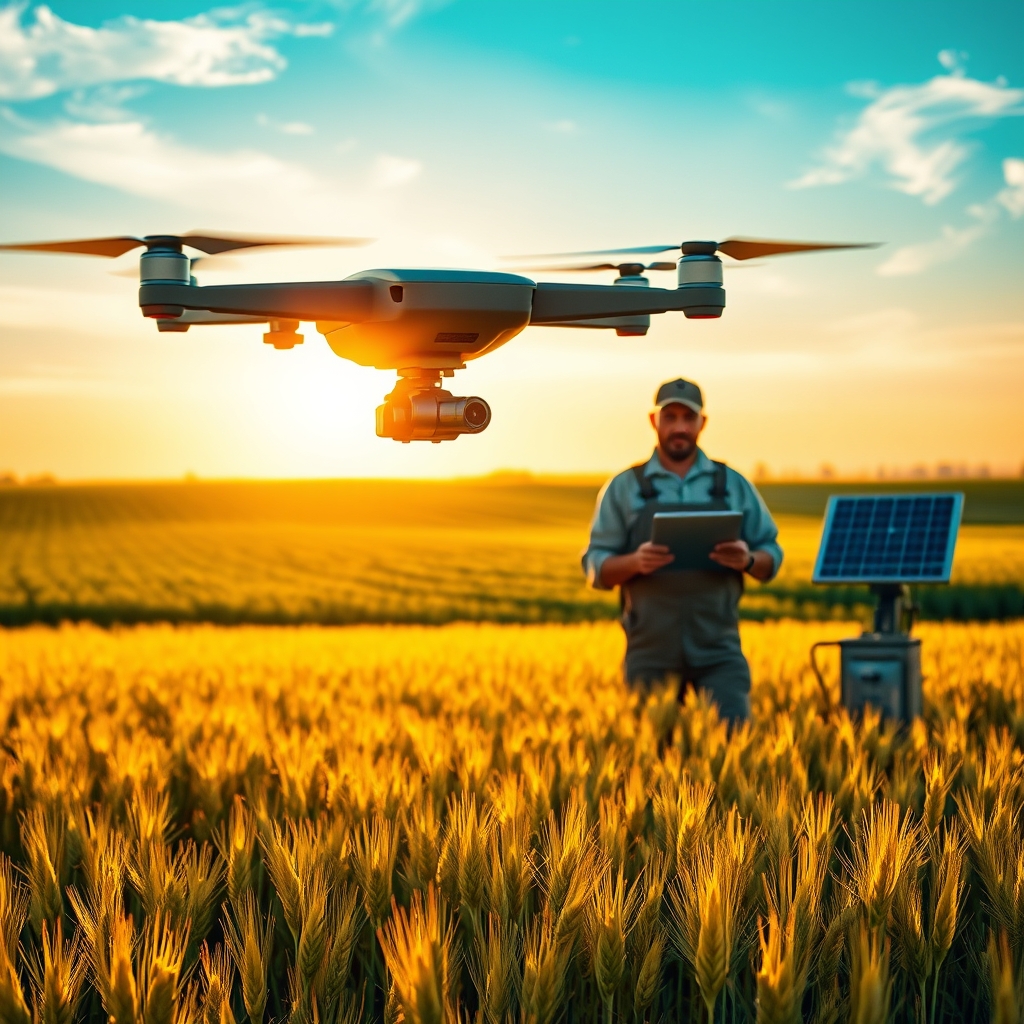
In the heart of the countryside, where golden fields stretch endlessly under the open sky, a quiet transformation is taking place. Farmers no longer rely solely on intuition and experience to nurture their crops. Instead, they are turning to a fusion of advanced technologies that promise to redefine agriculture as we know it. At the forefront of this revolution are multispectral imaging and edge computing, two innovations that are turning vast expanses of farmland into highly efficient, data-driven ecosystems.
The Eyes That See Beyond the Visible
Multispectral imaging is not just another technological marvel; it is the eyes of modern agriculture. Unlike traditional cameras that capture images in the visible spectrum, multispectral sensors can detect light across multiple wavelengths, including those invisible to the human eye. This capability allows farmers to see what was once unseen: the subtle variations in plant health, moisture levels, and even nutrient deficiencies that lie beneath the surface.
Drones equipped with multispectral cameras soar above fields, capturing data that reveals the hidden stories of the crops below. Each pixel in the resulting images holds a wealth of information, from chlorophyll content to water stress levels. By analyzing these images, farmers can identify areas of concern before they become visible to the naked eye, enabling proactive interventions that save time, resources, and yields. The precision offered by multispectral imaging is not just about improving efficiency; it is about cultivating a deeper connection between humans and the land they steward.
The Brain Behind the Operation
However, the true power of multispectral imaging lies not just in the data it collects, but in how that data is processed and acted upon. This is where edge computing steps in, serving as the brain that makes sense of the vast amounts of information streaming in from the skies. Edge computing brings computational power closer to the source of data, reducing latency and enabling real-time decision-making.
Imagine a drone flying over a field, capturing multispectral images and sending them to a nearby edge server. Within seconds, the server processes the data, identifies areas of water stress, and triggers an automated irrigation system to deliver the precise amount of water needed. This seamless integration of sensing, processing, and action is what sets modern precision agriculture apart. It is a symphony of technology, where every note is played with precision, and every decision is informed by data.
The Role of AI in the Fields
Artificial intelligence is the conductor of this symphony, orchestrating the flow of data and ensuring that every action is optimized for maximum efficiency. AI algorithms analyze multispectral images, learning to recognize patterns and anomalies that might escape even the most experienced farmers. Over time, these algorithms become more sophisticated, adapting to the unique conditions of each farm and providing increasingly accurate insights.
For instance, AI can predict the onset of diseases by detecting subtle changes in plant reflectance long before symptoms appear. It can also optimize fertilizer application, ensuring that crops receive the right nutrients at the right time, reducing waste and environmental impact. The marriage of AI and multispectral imaging is not just about improving yields; it is about creating a sustainable future where agriculture works in harmony with nature.
The Ripple Effects of Precision Agriculture
The benefits of multispectral imaging and edge computing extend far beyond the fields. By enabling more efficient use of resources, these technologies help reduce the environmental footprint of agriculture. Water, a precious and often scarce resource, is used more judiciously, while the overapplication of fertilizers and pesticides becomes a thing of the past. This not only benefits the environment but also improves the economic viability of farming, making it a win-win for both farmers and the planet.
Moreover, the data collected through multispectral imaging can be shared across farms, creating a network of knowledge that benefits the entire agricultural community. Farmers can learn from each other’s experiences, adopting best practices and refining their approaches based on real-world data. This collaborative approach to agriculture fosters innovation and drives continuous improvement, ensuring that the industry remains resilient in the face of challenges such as climate change and population growth.
Challenges and the Road Ahead
Despite its immense potential, the adoption of multispectral imaging and edge computing in agriculture is not without challenges. The initial cost of implementing these technologies can be prohibitive for small-scale farmers, and the complexity of the systems requires a certain level of technical expertise. However, as the technology matures and becomes more accessible, these barriers are gradually being overcome.
Governments and private organizations are stepping up to support farmers in adopting these innovations, offering subsidies, training programs, and partnerships that make the transition smoother. The rise of affordable, user-friendly drones and edge computing solutions is also democratizing access to precision agriculture, ensuring that its benefits are not limited to large-scale operations.
As we stand on the brink of a new era in agriculture, it is clear that the fusion of multispectral imaging and edge computing is more than just a technological advancement. It is a paradigm shift, one that promises to transform the way we grow food, manage resources, and interact with the natural world. The fields of tomorrow will not be tilled by guesswork, but by data-driven insights that ensure every seed planted has the best chance to thrive. In this future, technology and nature coexist in perfect harmony, each enhancing the other in a dance as old as time itself, yet as new as the dawn of a digital age. The harvest of the future is not just about what we reap, but how we grow it, and the tools we choose to nurture the earth beneath our feet.