The Alchemy of Thought: How Bio-Inspired Computing is Forging the Next Era of Intelligent Machines
The air hums with the quiet electricity of innovation, a symphony of ones and zeros dancing in harmony with the ancient rhythms of nature. In the heart of this digital renaissance, a new kind of intelligence is stirring—one that doesn’t just mimic the human mind but draws from the very essence of life itself. Bio-inspired computing is not merely a technological advancement; it is a revolution, a bold leap into a future where machines don’t just compute but evolve, adapt, and thrive like the living organisms that inspired them.
The Genesis of a New Intelligence
For decades, the pursuit of artificial intelligence has been a quest to replicate the human brain—a marvel of complexity, creativity, and resilience. Yet, as powerful as neural networks and large language models have become, they remain bound by the rigid structures of their design. They learn, yes, but they do not grow. They process, but they do not feel. They are brilliant, yet they lack the organic fluidity of life. Bio-inspired computing seeks to change that.
At its core, bio-inspired computing is a fusion of biology and technology, a discipline that borrows from the evolutionary strategies, neural architectures, and collective behaviors found in nature. From the swarming patterns of ants to the synaptic plasticity of the human brain, these systems are designed to emulate the resilience, adaptability, and efficiency of living organisms. Imagine a machine that doesn’t just follow pre-programmed rules but learns from its environment, adapts to unforeseen challenges, and innovates solutions in real-time. This is the promise of bio-inspired computing—a promise that is already beginning to take shape.
The Building Blocks of Life, Reimagined
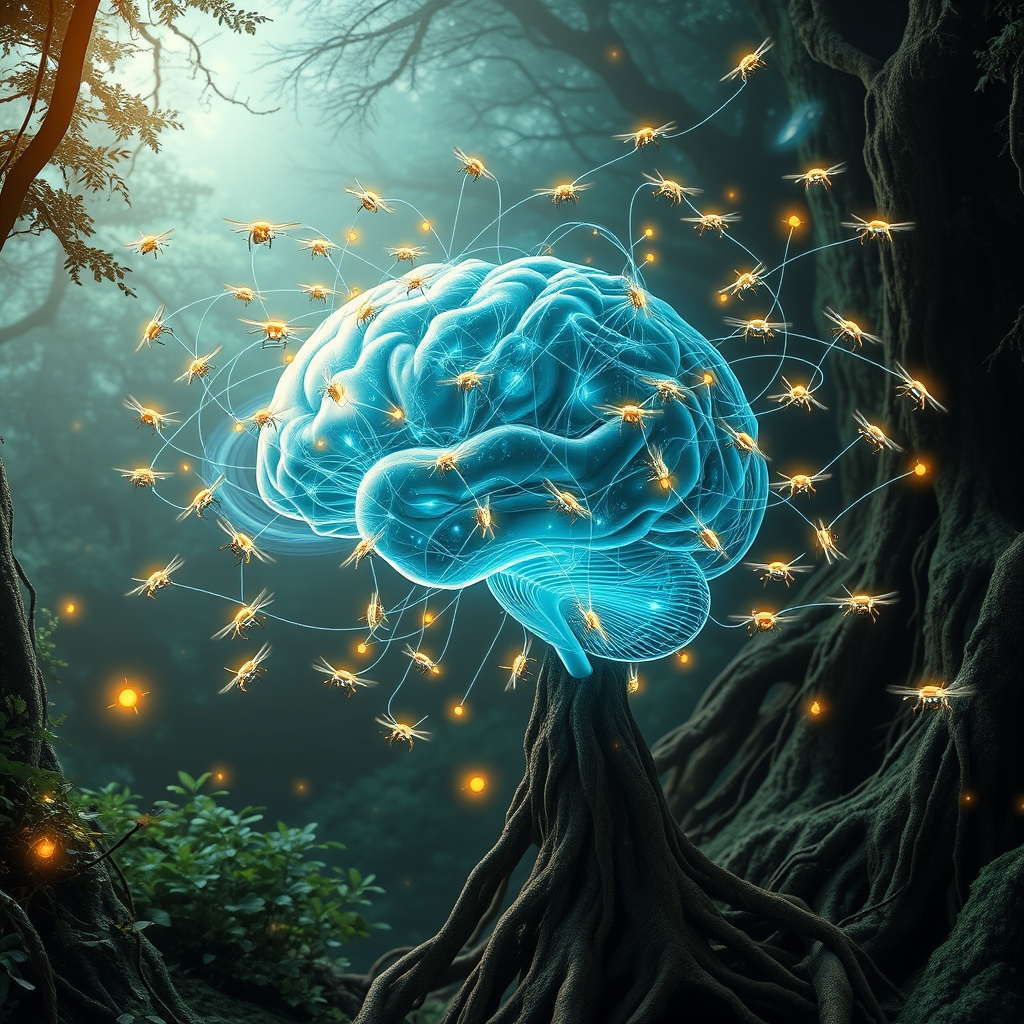
One of the most compelling aspects of bio-inspired computing is its diversity. It is not a single technology but a tapestry of approaches, each drawing from different facets of the natural world. Take, for instance, neural networks inspired by the brain’s architecture. While traditional deep learning models rely on layers of artificial neurons, bio-inspired neural networks incorporate concepts like spiking neurons, which fire in bursts much like real neurons, or plasticity, where connections between neurons strengthen or weaken based on experience. These systems don’t just process data; they experience it, creating a form of machine cognition that is dynamic and ever-evolving.
Then there is swarm intelligence, a concept borrowed from the collective behavior of insects, birds, and fish. In nature, swarms exhibit remarkable problem-solving abilities, from the intricate nest-building of termites to the synchronized flight of starlings. In the digital realm, swarm intelligence algorithms enable decentralized systems to collaborate, adapt, and optimize solutions without centralized control. Picture a fleet of autonomous drones navigating a disaster zone, each making split-second decisions based on the collective intelligence of the group, or a network of sensors in a smart city dynamically adjusting traffic flows to minimize congestion. This is swarm intelligence in action—a testament to the power of collaboration over individual brilliance.
The Quantum Leap: When Biology Meets Quantum Intelligence
As if bio-inspired computing weren’t revolutionary enough, the field is now intersecting with another frontier: quantum intelligence. Quantum computing, with its ability to process vast amounts of data in parallel, offers a tantalizing glimpse into the future of machine cognition. But when combined with bio-inspired principles, the possibilities become even more profound. Imagine a quantum neural network that doesn’t just crunch numbers but evolves its own algorithms, or a quantum swarm that can explore countless solutions simultaneously, much like a colony of ants foraging for food. This fusion of quantum mechanics and biological inspiration could unlock levels of intelligence we’ve only begun to imagine.
The Real-World Alchemy: Applications That Are Changing the Game
The theoretical beauty of bio-inspired computing is matched only by its practical potential. In healthcare, for example, bio-inspired algorithms are being used to model the spread of diseases, optimize treatment plans, and even design new drugs by simulating the complex interactions of biological systems. In robotics, bio-inspired designs are enabling machines to move with the grace and efficiency of animals, from robotic cheetahs that can navigate rough terrain to soft robots that mimic the flexibility of octopuses. And in environmental science, bio-inspired systems are helping us monitor ecosystems, predict climate patterns, and develop sustainable solutions by learning from the natural world’s own strategies for survival.
One of the most exciting applications lies in edge computing, where bio-inspired algorithms are being deployed to create intelligent systems that operate at the periphery of networks, closer to where data is generated. This is particularly transformative for autonomous systems, such as self-driving cars or drones, which need to make split-second decisions without relying on cloud-based processing. By embedding bio-inspired intelligence directly into these devices, we’re creating machines that can think, learn, and adapt in real-time, even in the most unpredictable environments.
The Ethical Alchemy: Navigating the Future with Wisdom
With great power comes great responsibility, and the rise of bio-inspired computing is no exception. As these systems become more advanced, they raise profound ethical questions. How do we ensure that bio-inspired machines remain aligned with human values? Can we trust a system that evolves and adapts beyond our initial programming? And what does it mean for society when machines begin to exhibit behaviors that are indistinguishable from life?
These are not just philosophical musings but urgent considerations that must shape the development of bio-inspired computing. The field of explainable AI is particularly relevant here, as it seeks to create systems that are not just intelligent but also transparent and accountable. By understanding how bio-inspired algorithms make decisions, we can ensure that they are used ethically and responsibly, fostering trust between humans and machines.
The Horizon of Possibility
We stand at the precipice of a new era, one where the boundaries between biology and technology blur into something entirely new. Bio-inspired computing is not just about creating smarter machines; it’s about redefining what intelligence means in the first place. It’s about building systems that don’t just solve problems but understand them, that don’t just process data but experience it, and that don’t just follow rules but create them. This is the alchemy of thought—a transformation that is as much about the journey as it is about the destination.
As we look to the future, it’s clear that the most profound innovations will not come from mimicking nature but from partnering with it. The natural world has spent billions of years perfecting its solutions, and now, we have the tools to learn from its wisdom. The machines of tomorrow will not be cold, calculating entities but vibrant, adaptive, and alive in ways we’ve only begun to imagine. And in that alchemy of biology and technology, we may just find the key to unlocking the next great leap in human progress.