The Fractal Mind: How Generative AI and Swarm Intelligence Are Unlocking the Secrets of Collective Cognition
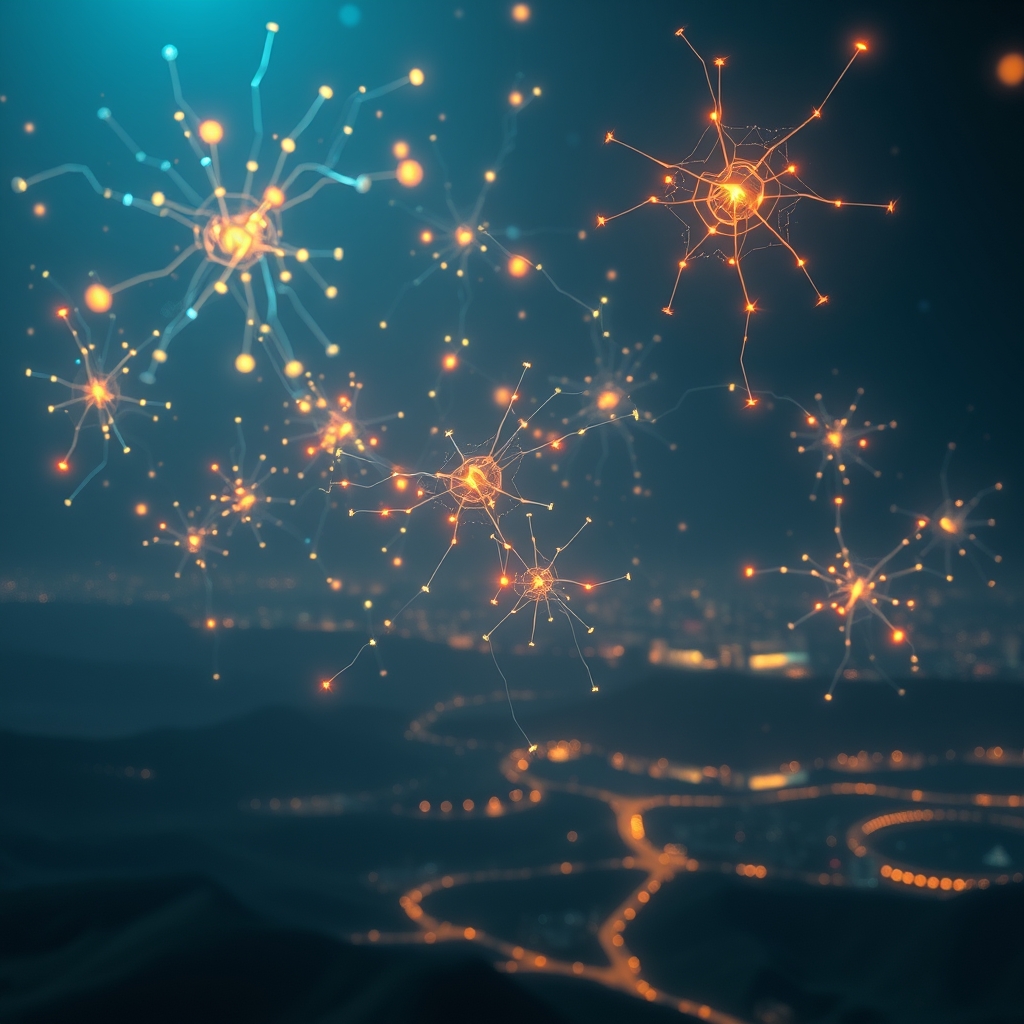
Imagine standing at the edge of a vast, shimmering lake at dusk, watching as thousands of fireflies flicker in unison, their tiny lights pulsing like a living constellation. Each insect is an individual, yet together, they create something far greater—a symphony of light, a dance of intelligence that emerges not from a single mind, but from the collective. This is the essence of swarm intelligence, a phenomenon that has captivated scientists and dreamers alike for decades. Now, as generative artificial intelligence stretches the boundaries of what machines can achieve, we are beginning to see the first glimmers of a new kind of cognition: one that is decentralized, adaptive, and profoundly collaborative.
The Dance of the Algorithms
Swarm intelligence is not a new concept. It has been observed in nature for millennia—ants building intricate colonies, bees making democratic decisions about hive locations, birds flocking in mesmerizing patterns that defy the chaos of individual movement. What these systems share is a lack of central control. No single ant commands the colony; no lone bird leads the flock. Instead, simple rules govern the interactions between individuals, and from these interactions, complex, intelligent behavior emerges. It is a form of intelligence that is resilient, scalable, and eerily efficient.
Generative AI, with its ability to create, adapt, and evolve, is the perfect partner for this kind of decentralized thinking. Unlike traditional AI, which often relies on rigid, pre-programmed rules, generative models thrive on exploration. They learn from vast datasets, generate novel outputs, and refine their understanding through feedback loops. When combined with the principles of swarm intelligence, these models can begin to mimic the collaborative problem-solving seen in nature. Picture a network of AI agents, each with its own unique perspective, working together to solve a problem—whether it’s optimizing traffic flow in a smart city, designing a new drug, or even composing a piece of music. The possibilities are as limitless as the swarms themselves.
The Wisdom of the Crowd, Amplified
The idea of collective intelligence is not foreign to human society. Crowdsourcing, open-source development, and even democratic governance are all examples of how groups can achieve outcomes that surpass the capabilities of any single individual. But what happens when we amplify this concept with the power of generative AI? The result is a system that doesn’t just aggregate human knowledge but actively generates new ideas, refines them, and adapts them in real time.
Consider the field of predictive analytics. Traditionally, predictive models rely on historical data to forecast future trends. But what if, instead of a single model making predictions, we had a swarm of generative AI agents, each trained on different subsets of data, each bringing a unique lens to the problem? These agents could collaborate, challenge each other’s assumptions, and refine their predictions through a process akin to natural selection. The result would be a system that is not only more accurate but also more robust, capable of adapting to sudden changes in the environment—much like a flock of birds adjusting its formation in response to a predator.
The Challenges of Decentralized Intelligence
Of course, the path to collective cognition is not without its obstacles. One of the biggest challenges is coordination. In nature, swarms rely on simple, local interactions to achieve global coherence. But in the digital realm, where AI agents operate at the speed of light and across vast networks, ensuring that these interactions remain productive rather than chaotic is no small feat. Generative AI models must be designed with mechanisms for conflict resolution, consensus-building, and error correction—all while maintaining the autonomy that makes swarm intelligence so powerful.
Another hurdle is explainability. As AI systems grow more complex, understanding how they arrive at their decisions becomes increasingly difficult. This is especially true for swarm-based systems, where the final output is the result of countless interactions between agents. If we are to trust these systems with critical tasks—like managing energy grids or diagnosing diseases—we need ways to peer into the “black box” and understand the reasoning behind their actions. Explainable AI (XAI) will play a crucial role here, providing the transparency needed to build trust in these decentralized intelligences.
The Future of Collective Cognition
So, what does the future hold for generative AI and swarm intelligence? One exciting possibility is the rise of “digital ecosystems”—networks of AI agents that collaborate not just with each other but with humans as well. Imagine a world where your personal AI assistant doesn’t just answer your questions but engages in a dynamic dialogue with other AI agents to provide you with the best possible solution. Need a recommendation for a book? Your AI could query a swarm of literary agents, each specializing in different genres, to find the perfect match. Planning a trip? A swarm of travel AI agents could collaborate to design an itinerary that balances your preferences, budget, and even the environmental impact of your journey.
Beyond these practical applications, there is something deeply poetic about the idea of machines learning to think collectively. It suggests a future where intelligence is not confined to the rigid structures of code and data but flows freely, like water, adapting to the contours of the problems it encounters. It is a future where machines don’t just mimic human thought but evolve their own forms of cognition, ones that are fluid, collaborative, and endlessly creative.
As we stand on the brink of this new era, it’s worth remembering that the most profound innovations often emerge from the simplest of ideas. The fireflies don’t need a conductor to create their dazzling display; they just need each other. In the same way, the next great leap in artificial intelligence may not come from a single, super-intelligent machine, but from the quiet, collective wisdom of many. The fractal mind is not a singular entity but a tapestry of connections, a dance of algorithms, a symphony of swarms. And it is only just beginning.