The Quantum Guardians: How Quantum Cryptography and Decentralized Identity Are Securing the Digital Frontier
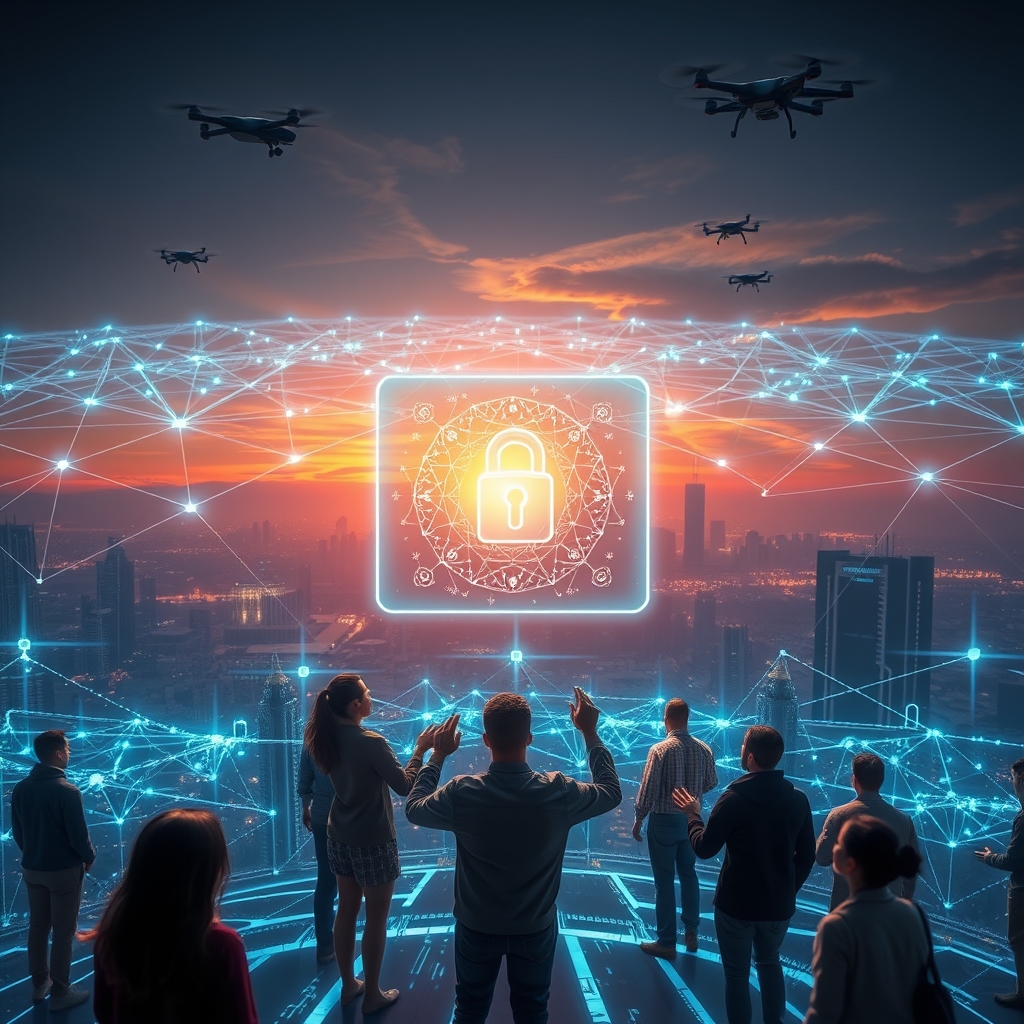
In the vast, interconnected expanse of the digital age, where data flows like rivers and information is the new currency, security has become the cornerstone of trust. The rise of quantum computing threatens to upend the very foundations of encryption, rendering traditional methods obsolete. Yet, in this evolving landscape, two revolutionary technologies—quantum cryptography and decentralized identity—are emerging as the guardians of our digital future, weaving an unbreakable tapestry of security and autonomy.
The Quantum Threat: A Looming Storm
For decades, encryption has relied on mathematical complexity to protect sensitive data. Algorithms like RSA and ECC (Elliptic Curve Cryptography) have stood as impenetrable fortresses, their strength derived from the difficulty of factoring large numbers or solving discrete logarithms. However, the advent of quantum computing poses an existential threat to these systems. Shor’s algorithm, a quantum computing breakthrough, can factor large numbers exponentially faster than classical computers, effectively dismantling the encryption that secures everything from financial transactions to national secrets. The storm is coming, and the digital world must prepare.
Quantum Cryptography: The Unbreakable Shield
Enter quantum cryptography, a field that leverages the fundamental principles of quantum mechanics to create theoretically unbreakable encryption. At its heart lies Quantum Key Distribution (QKD), a method that uses the properties of quantum particles—such as photons—to transmit encryption keys. Any attempt to intercept or eavesdrop on these keys disrupts their quantum state, alerting the communicating parties to the breach. This phenomenon, known as the observer effect, ensures that security is not just robust but inherently detectable.
One of the most promising implementations of QKD is the BB84 protocol, developed by Charles Bennett and Gilles Brassard in 1984. This protocol encodes information in the polarization states of photons, creating a key that is immune to computational attacks. As quantum networks expand, QKD is poised to become the gold standard for secure communication, safeguarding everything from government communications to personal data in an era where quantum computers could otherwise lay waste to traditional encryption.
The Role of Silicon Photonics in Quantum Networks
For quantum cryptography to reach its full potential, it requires a robust infrastructure capable of transmitting quantum information over long distances. Silicon photonics, a technology that integrates optical components onto silicon chips, is emerging as a critical enabler. By miniaturizing and scaling quantum communication devices, silicon photonics makes it possible to build quantum networks that are both efficient and cost-effective. These networks could one day span continents, creating a quantum internet where data is transmitted with absolute security, impervious to the prying eyes of hackers or quantum computers.
Decentralized Identity: Reclaiming Control in a Digital World
While quantum cryptography secures the transmission of data, decentralized identity addresses a more fundamental question: Who controls our digital selves? In today’s world, identity is fragmented across countless platforms, each holding a piece of our personal information. Centralized databases are prime targets for breaches, and the consequences of such attacks can be devastating—identity theft, financial fraud, and loss of privacy. Decentralized identity offers a radical alternative, shifting control from institutions to individuals.
Built on blockchain technology, decentralized identity systems allow users to store their credentials in a digital wallet, accessible only through cryptographic keys. These credentials, verified by trusted entities, can be shared selectively without relying on a central authority. For example, a university could issue a digital diploma that a graduate could then share with potential employers, who could verify its authenticity without ever accessing the university’s database. This not only enhances security but also restores agency to individuals, allowing them to manage their digital identities with unprecedented autonomy.
The Synergy of Quantum and Decentralization
The convergence of quantum cryptography and decentralized identity creates a powerful synergy. Quantum-secured networks ensure that the transmission of identity credentials is impervious to interception, while decentralized identity systems eliminate single points of failure. Together, they form a bulwark against the vulnerabilities of the digital age. Imagine a world where your digital identity is not only yours to control but also protected by the laws of quantum physics. No more massive data breaches, no more stolen credentials—just a seamless, secure, and sovereign digital existence.
The Road Ahead: Challenges and Opportunities
Despite their promise, these technologies are not without challenges. Quantum cryptography, for instance, faces hurdles in scalability and cost. Current QKD systems require specialized hardware and can only transmit keys over limited distances without quantum repeaters. Similarly, decentralized identity systems must overcome issues of interoperability and user adoption. Standards like the Decentralized Identity Foundation’s (DIF) specifications are a step in the right direction, but widespread implementation will require collaboration across industries and governments.
Yet, the opportunities far outweigh the obstacles. Governments are already investing in quantum-secure networks, with projects like the EU’s Quantum Internet Alliance and China’s Micius satellite demonstrating the feasibility of global quantum communication. Meanwhile, companies like Microsoft and IBM are pioneering decentralized identity solutions, integrating them into their ecosystems. As these technologies mature, they will redefine the very fabric of digital trust, creating a world where security is not just a feature but a fundamental right.
The digital frontier is vast and uncharted, but with quantum cryptography and decentralized identity as our guides, we are not merely navigating it—we are securing it. The guardians of this new era are not just technologies but philosophies, principles that place security and autonomy at the heart of the digital experience. As we stand on the precipice of this quantum revolution, one thing is clear: the future of security is not just about building stronger walls but about reimagining the very foundations of trust. In this world, the keys to our digital lives are not held by institutions but by the immutable laws of physics and the unyielding power of individual sovereignty.