
The Sky’s New Sentinels: How Advanced UAVs Are Redefining Our World
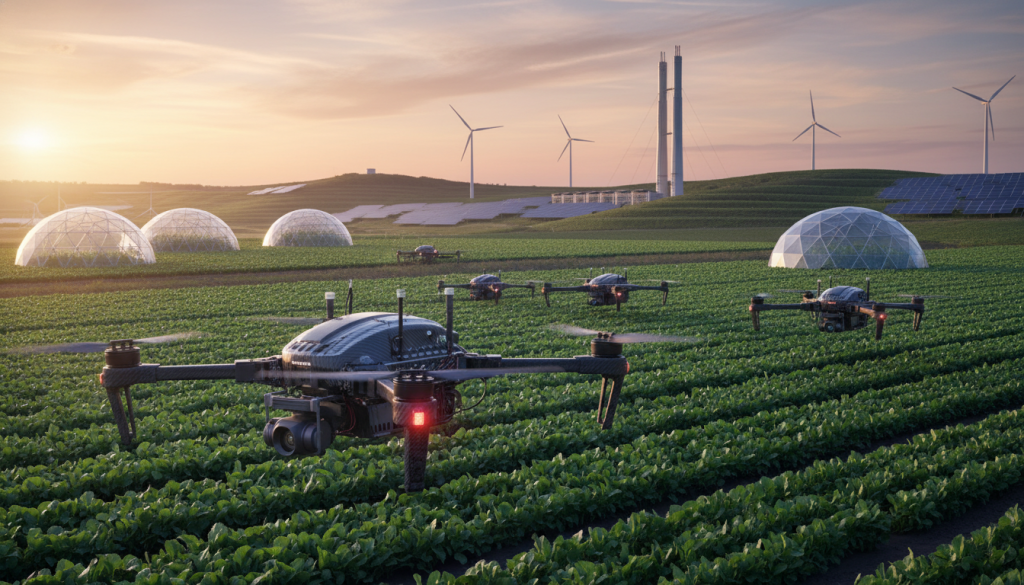
The hum of a drone is no longer an unusual sound; it’s becoming the soundtrack to progress. From soaring above vast farmlands to meticulously mapping complex terrains, Unmanned Aerial Vehicles (UAVs) are rapidly evolving from novel gadgets into indispensable tools. This transformation is fueled by a relentless march of technological innovation, pushing the boundaries of what’s possible in autonomous flight systems, agricultural efficiency, and logistical networks.
Precision Agriculture Takes Flight
In the realm of agriculture, the integration of precision agriculture drones is nothing short of revolutionary. Equipped with sophisticated sensors, these aerial workhorses provide farmers with an unprecedented level of insight into their crops. Thermal imaging sensors, for instance, can detect subtle variations in plant temperature, signaling stress from disease, pests, or water deficiency long before these issues become visible to the naked eye. This early detection allows for targeted interventions, minimizing the use of pesticides and water, and ultimately leading to healthier crops and higher yields. AI driven navigation ensures that these drones can systematically cover entire fields, capturing high-resolution data that, when processed through photogrammetry mapping techniques, creates detailed topographical maps and plant health assessments. Real time kinematic (RTK) positioning further refines this data, allowing for centimeter-level accuracy in mapping and application, ensuring that resources are applied precisely where and when they are needed.
The Rise of Swarm Intelligence and Delivery Logistics
Beyond the fields, the concept of swarm intelligence is beginning to unlock new efficiencies in complex operations. Imagine a coordinated fleet of drones working in unison to perform tasks that would be impossible for a single unit. This collective intelligence is particularly relevant for delivery drone logistics. As e-commerce continues its exponential growth, the demand for rapid and efficient delivery is paramount. Swarms of drones, managed by sophisticated AI algorithms, can optimize routes, manage airspace, and even coordinate to overcome unexpected obstacles. This vision of autonomous aerial networks promises to reduce delivery times and costs, while also alleviating congestion on our roads. Obstacle avoidance technology, powered by advanced sensors and edge computing UAV capabilities, is crucial for the safe and reliable operation of these autonomous fleets, ensuring they can navigate dynamic environments without incident.
Pushing the Boundaries of Flight and Endurance
The physical capabilities of drones are also undergoing a dramatic evolution. The development of fixed wing VTOL (Vertical Take-Off and Landing) designs combines the agility of multirotor drones with the endurance and speed of fixed-wing aircraft, enabling longer missions and coverage of vast areas. This is further enhanced by advancements in power sources, with hydrogen powered drones emerging as a promising solution for extended flight times and reduced environmental impact. Carbon fiber airframes contribute to lighter, stronger, and more aerodynamic designs, while improvements in brushless motor efficiency mean that drones can fly longer and carry heavier payloads. The capacity for heavy lift payload is opening up new applications, from industrial inspections of large infrastructure to the transport of critical medical supplies in remote areas. Long range telemetry systems ensure that operators maintain constant communication and control, even over hundreds of kilometers, a vital component for any mission requiring extensive operational reach.
Ensuring Safety and Integration in Our Skies
As drone technology becomes more prevalent, so too does the need for robust safety and regulatory frameworks. Remote identification systems are becoming a standard requirement, providing authorities with the ability to identify drones operating in their airspace, enhancing security and accountability. In scenarios where unauthorized drone activity poses a threat, kinetic drone interception technologies offer a non-destructive or minimally destructive means of neutralizing these risks. The integration of 5G connectivity is also poised to accelerate this evolution, offering high bandwidth, low latency communication that will be essential for real time data processing, remote control, and the seamless operation of complex drone systems. The convergence of these technologies—from advanced AI navigation and sophisticated sensor suites to enhanced airframes and reliable communication links—is paving the way for a future where drones are not just flying machines, but intelligent partners in a vast array of human endeavors.
The steady integration of these advanced capabilities signifies a profound shift in how we interact with our environment and conduct our business. As drones become more autonomous, more capable, and more deeply embedded into our infrastructure, they are quietly reshaping industries and creating possibilities that were once confined to science fiction, promising a future where the sky is not a limit, but a canvas for innovation and progress.