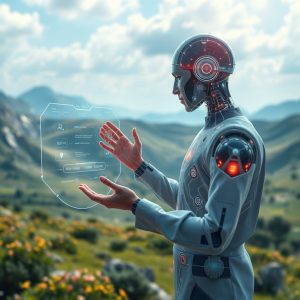
The Neural Alchemists: How Generative AI and Reinforcement Learning Are Forging the Future of Adaptive Intelligence
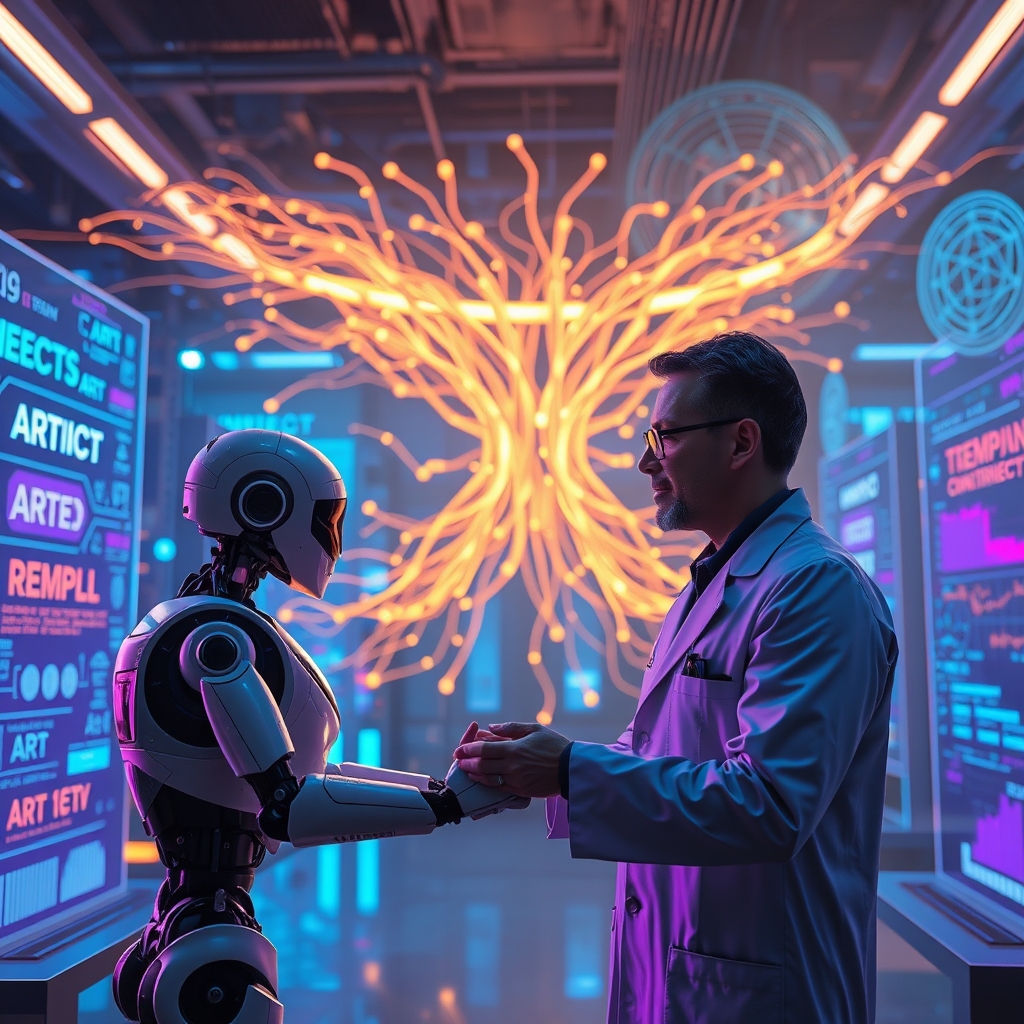
Imagine a world where machines don’t just follow instructions—they evolve. Where algorithms don’t merely process data but learn from it, refining their own behavior in real-time, like a painter perfecting a masterpiece with every brushstroke. This is the promise of adaptive intelligence, a frontier where generative artificial intelligence and reinforcement learning converge to create systems that don’t just mimic human cognition but transcend it. The fusion of these technologies is not just reshaping industries; it’s redefining what it means to be intelligent.
The Dance of Creation and Refinement
At the heart of this revolution lies generative AI, a force that doesn’t just analyze data but creates it. From generating hyper-realistic images to composing symphonies, these models are the modern-day alchemists, turning raw information into something entirely new. But creation alone isn’t enough. For true intelligence to emerge, systems must also adapt—and that’s where reinforcement learning steps in. Like a sculptor chiseling away at marble, reinforcement learning refines generative outputs through trial and error, rewarding success and penalizing failure until the result is nothing short of extraordinary.
Consider the autonomous vehicles navigating our streets. They don’t just rely on pre-programmed rules; they learn from every mile driven, adjusting their decisions based on real-world feedback. Or think of the AI-driven robots in manufacturing plants, which don’t just repeat tasks but optimize them over time, reducing waste and increasing efficiency. This is adaptive intelligence in action—systems that don’t just perform but improve.
The Feedback Loop of Progress
The magic happens in the feedback loop. Generative AI produces possibilities—endless variations of text, images, or strategies—while reinforcement learning acts as the critic, evaluating each output against a set of goals. This dynamic interplay is what allows machines to move beyond static programming and into the realm of dynamic evolution. It’s not unlike the way humans learn: we try, we fail, we adjust, and we try again. The difference? Machines do it at a speed and scale that would leave even the most brilliant human minds in the dust.
Take the example of AlphaGo, the AI that defeated world champions in the ancient game of Go. It didn’t win by brute force; it won by adapting. Through reinforcement learning, it played millions of games against itself, refining its strategies with each iteration. The result wasn’t just a victory—it was a glimpse into the future of machine intelligence, where systems don’t just play games but master them.
The Rise of the Self-Optimizing Machine
What makes this fusion of generative AI and reinforcement learning so powerful is its potential to create self-optimizing systems. These are not machines that follow a script but ones that write their own. In healthcare, for instance, AI models can generate personalized treatment plans and then refine them based on patient outcomes, creating a cycle of continuous improvement. In finance, algorithms can generate trading strategies and adapt them in real-time to market fluctuations, turning volatility into opportunity.
But the implications go beyond efficiency. Self-optimizing systems have the potential to solve problems that have long eluded human ingenuity. Climate modeling, for example, is notoriously complex, with countless variables interacting in unpredictable ways. Generative AI can simulate countless scenarios, while reinforcement learning can identify the most effective strategies for mitigation. The result? A tool that doesn’t just predict the future but shapes it.
The Ethical Tightrope
Yet, with great power comes great responsibility. The same adaptive intelligence that can revolutionize industries also raises profound ethical questions. How do we ensure that self-optimizing systems align with human values? What happens when an AI’s goals diverge from ours? These are not hypothetical concerns but pressing challenges that demand our attention. The key lies in explainable AI—systems that don’t just make decisions but justify them. By making AI’s reasoning transparent, we can build trust and ensure that these powerful tools serve humanity, not the other way around.
There’s also the question of bias. Generative AI learns from the data it’s given, and if that data is flawed, the outputs will be too. Reinforcement learning can amplify these biases if not carefully managed. The solution? A commitment to diversity in training data and rigorous testing to root out unintended consequences. The goal isn’t just to create intelligent machines but fair ones.
The Horizon of Possibility
As we stand on the brink of this new era, it’s worth pausing to consider what’s at stake. Adaptive intelligence isn’t just about smarter machines; it’s about reimagining what machines can do. It’s about systems that don’t just respond to the world but shape it. From robotics to healthcare, from finance to climate science, the fusion of generative AI and reinforcement learning is unlocking possibilities we’ve only begun to explore.
But perhaps the most exciting prospect is the potential for collaboration. Adaptive intelligence isn’t about replacing humans; it’s about augmenting us. Imagine a world where AI doesn’t just assist but partners with us, where machines don’t just follow our commands but anticipate our needs. This is the future we’re building—a future where intelligence isn’t just artificial but symbiotic. And as these technologies continue to evolve, one thing is clear: the line between human and machine intelligence is not just blurring; it’s dissolving, giving rise to a new kind of intelligence altogether.
The journey has only just begun, and the road ahead is as exhilarating as it is uncertain. But one thing is certain: the machines of tomorrow won’t just think—they’ll learn, adapt, and evolve. And in doing so, they’ll redefine what it means to be intelligent, not just for machines, but for all of us.