
The Invisible Farmers: How Smart Dust and Neuromorphic Chips Are Cultivating the Fields of Tomorrow
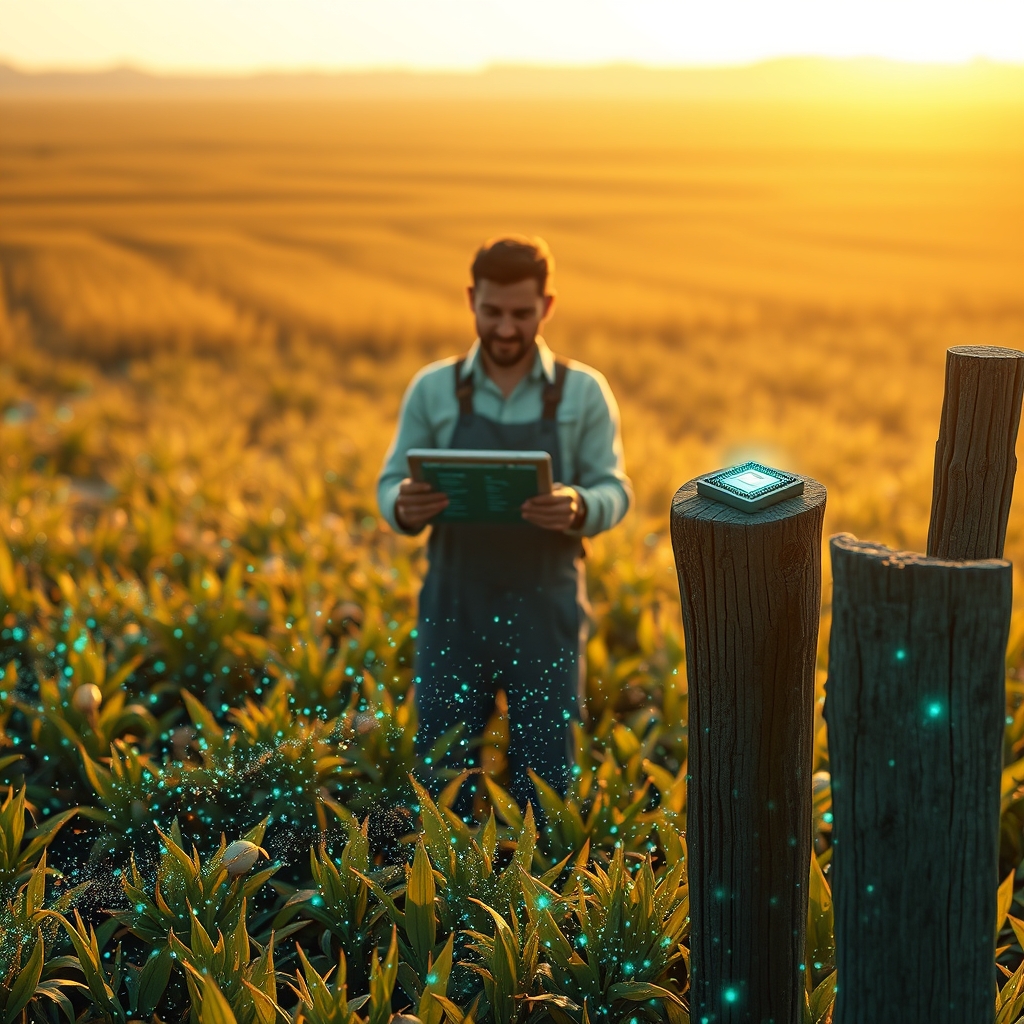
The first light of dawn spills across the horizon, painting the fields in hues of gold and amber. Yet, beneath this tranquil scene, an invisible revolution is unfolding—one where the soil whispers secrets to the wind, and the wind carries them to a network of microscopic sentinels. These are not the farmers of old, with calloused hands and weathered brows, but a new breed of agricultural stewards: smart dust and neuromorphic chips, working in silent harmony to redefine the very essence of precision agriculture.
The Dust That Thinks
Imagine a world where every grain of soil is a sensor, every leaf a data point, and every breeze a messenger. This is the promise of smart dust—microscopic, wireless devices no larger than a speck of pollen, yet capable of monitoring temperature, humidity, nutrient levels, and even the subtle chemical signatures of plant stress. Scattered like seeds across the fields, these tiny marvels form a self-organizing network, a living, breathing nervous system for the land.
Unlike traditional sensors, which are bulky, expensive, and limited in scope, smart dust operates at a scale previously unimaginable. Each particle is a node in a vast, decentralized web, communicating with its neighbors through low-power radio waves or even optical signals. When one detects a change—a sudden drop in moisture, a spike in nitrogen levels—it relays the information instantaneously, creating a real-time map of the farm’s health. Farmers no longer need to walk the fields with clipboards or rely on satellite imagery with its lagging updates. The land speaks to them directly, in a language of data and insight.
The Brain Behind the Dust
But raw data is meaningless without interpretation. This is where neuromorphic chips enter the stage, mimicking the neural architecture of the human brain to process information with unprecedented efficiency. Traditional computing relies on brute-force calculations, crunching numbers in linear sequences. Neuromorphic chips, however, operate like biological neurons, firing in parallel and adapting to patterns in real time. They don’t just analyze data—they learn from it.
In the context of precision agriculture, these chips act as the farm’s cognitive center. They sift through the torrent of data streaming from the smart dust network, identifying correlations that would elude even the most experienced agronomist. A slight variation in leaf temperature might signal the onset of disease before visible symptoms appear. A shift in soil pH could hint at nutrient depletion long before yields begin to suffer. By the time a human farmer notices a problem, the system has already diagnosed it, predicted its trajectory, and recommended a course of action—whether it’s adjusting irrigation, applying targeted fertilizers, or deploying autonomous drones to treat affected areas.
The Dance of Energy and Efficiency
One of the most compelling aspects of this technological marriage is its sustainability. Smart dust operates on minuscule amounts of power, often harvesting energy from ambient sources like sunlight, vibration, or even the metabolic activity of microbes in the soil. Neuromorphic chips, too, are designed for efficiency, consuming a fraction of the energy required by conventional processors. Together, they form a system that is not only intelligent but also frugal, aligning perfectly with the principles of sustainable agriculture.
Consider the implications for water usage, a critical concern in an era of climate change. Traditional irrigation systems often rely on broad estimates, leading to overwatering in some areas and drought stress in others. Smart dust, however, provides hyper-localized data, allowing farmers to deliver water with surgical precision. Neuromorphic chips can then optimize irrigation schedules based on weather forecasts, soil moisture trends, and crop growth stages, reducing water waste by up to 30% without sacrificing yield. The same logic applies to fertilizers, pesticides, and even labor—every input becomes a calculated decision, not a guess.
The Human Touch in a Digital Age
For all its sophistication, this system is not about replacing farmers but empowering them. The goal is not to create fully autonomous farms but to augment human expertise with machine intelligence. A farmer’s intuition, honed over generations, remains invaluable. What changes is the scale and speed at which decisions can be made. Where once a farmer might have relied on memory and experience to judge when to plant or harvest, they now have a digital co-pilot, offering insights drawn from terabytes of data.
Moreover, this technology democratizes precision agriculture, making it accessible to smallholder farmers who have long been excluded from the benefits of large-scale agribusiness. A network of smart dust and neuromorphic chips doesn’t require vast acreage or deep pockets—just a willingness to embrace the future. In regions where water is scarce and arable land is dwindling, such tools could mean the difference between subsistence and prosperity.
The Fields of Tomorrow
As the sun climbs higher in the sky, the fields hum with quiet activity. The smart dust continues its vigil, the neuromorphic chips process their streams of data, and somewhere, a farmer reviews the latest insights on a tablet, making decisions that will shape the harvest to come. This is not the agriculture of our grandparents, nor even of our parents. It is something new—a fusion of biology and technology, of tradition and innovation, where the land is not just tilled but understood.
The invisible farmers are already here, scattered like seeds across the earth. They do not tire, they do not falter, and they do not forget. They are the harbingers of a new era, where every field is a living laboratory, every crop a data point, and every harvest a testament to the power of human ingenuity. The question is no longer whether this future will arrive, but how quickly we can cultivate it.