
The Invisible Thread: How Silicon Photonics and Edge Computing Are Weaving the Fabric of Smart Dust Networks
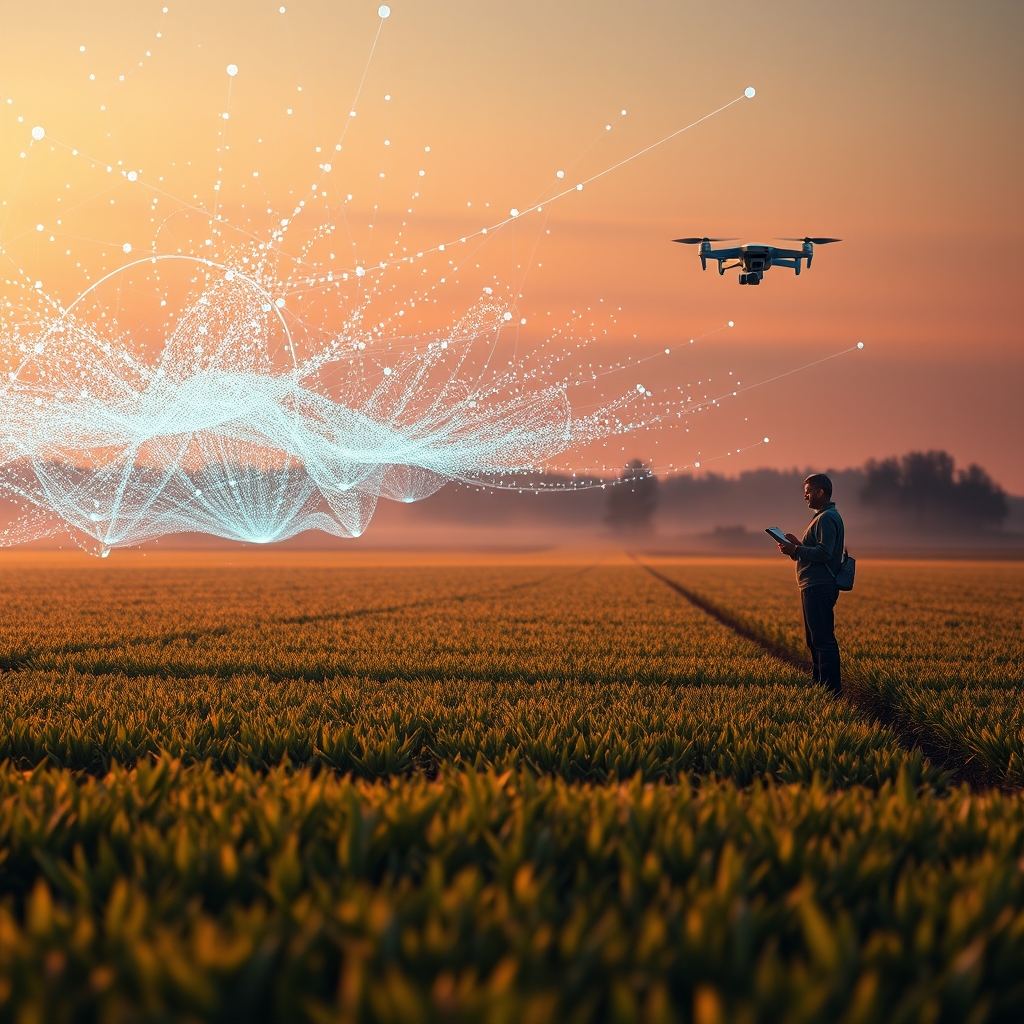
Imagine a world where the air itself hums with intelligence, where microscopic sensors drift like silent sentinels, gathering data from the most remote corners of our environment. This is not the stuff of science fiction but the emerging reality of Smart Dust, a network of minuscule, wireless sensors capable of monitoring everything from soil moisture in precision agriculture to structural integrity in bridges. Yet, the true magic lies not in the dust itself but in the invisible threads that bind these particles into a cohesive, intelligent web—threads spun from the convergence of Silicon Photonics and Edge Computing.
The Birth of the Invisible Network
Smart Dust is not a new concept, but its potential has long been constrained by the limitations of power, connectivity, and processing. Traditional wireless sensors, even when miniaturized, struggle with energy efficiency and the sheer volume of data they generate. Enter Silicon Photonics, a technology that replaces electrical signals with light, enabling faster, more efficient data transmission with minimal energy loss. By integrating photonic circuits into these microscopic sensors, we can create networks that communicate at the speed of light, literally, while consuming a fraction of the power required by conventional electronics.
But speed and efficiency are only part of the equation. The real challenge lies in making sense of the deluge of data these sensors produce. This is where Edge Computing steps in, decentralizing processing power and bringing it closer to the source of data. Instead of relying on distant cloud servers, edge computing allows Smart Dust networks to analyze and act on information in real-time, reducing latency and bandwidth demands. Picture a swarm of sensors in a precision agriculture field, each one monitoring soil conditions, humidity, and crop health. With edge computing, these sensors can instantly adjust irrigation systems or alert farmers to potential issues, all without the need for a centralized command center.
The Alchemy of Light and Logic
The marriage of Silicon Photonics and Edge Computing is not merely a technical achievement; it is a paradigm shift in how we perceive and interact with the world around us. Silicon Photonics, with its ability to transmit data at unprecedented speeds, transforms Smart Dust from a passive observer into an active participant in its environment. For instance, in industrial settings, these networks can detect minute vibrations in machinery, predicting failures before they occur and preventing costly downtime. In urban environments, they can monitor air quality in real-time, adjusting traffic flows to reduce pollution hotspots.
Yet, the true potential of this technology lies in its scalability. Unlike traditional sensor networks, which are often limited by their physical infrastructure, Smart Dust networks can expand organically, with each new particle seamlessly integrating into the existing web. This scalability is made possible by the low power demands of Silicon Photonics, which allow sensors to operate for extended periods without the need for frequent battery replacements or energy harvesting. Meanwhile, Edge Computing ensures that the network remains agile, capable of processing vast amounts of data without becoming overwhelmed.
The Silent Revolution in Precision Agriculture
One of the most promising applications of this technology is in Precision Agriculture, where the stakes are as high as the rewards. Farmers have long relied on intuition and experience to guide their decisions, but Smart Dust networks, powered by Silicon Photonics and Edge Computing, are turning agriculture into a data-driven science. Imagine a field where every plant is monitored individually, where soil conditions, nutrient levels, and pest activity are tracked in real-time. With this level of granularity, farmers can optimize water usage, reduce chemical inputs, and maximize yields, all while minimizing their environmental footprint.
But the benefits extend beyond the farm. In regions plagued by water scarcity, these networks can help allocate resources more efficiently, ensuring that every drop counts. In areas threatened by climate change, they can provide early warnings of drought or disease, giving farmers the time they need to adapt. And in the broader context of sustainable energy, Smart Dust networks can help reduce the carbon footprint of agriculture by minimizing the need for heavy machinery and synthetic inputs.
The Challenges Ahead
Despite its promise, the path to widespread adoption of Smart Dust networks is not without obstacles. One of the most significant challenges is the issue of data privacy and security. With sensors collecting information from every corner of our environment, the potential for misuse is a very real concern. Quantum Cryptography, another cutting-edge technology, may hold the key to securing these networks, but its integration into Smart Dust systems is still in its infancy.
Another challenge is the sheer complexity of managing such vast, decentralized networks. While Edge Computing helps mitigate some of these issues, the need for robust, adaptive algorithms to process and interpret data remains critical. Here, Agentic AI—AI systems capable of autonomous decision-making—could play a pivotal role, enabling Smart Dust networks to not only collect data but also act on it in real-time, without human intervention.
The Future, Written in Light
The convergence of Silicon Photonics and Edge Computing is more than just a technological advancement; it is a fundamental reimagining of how we interact with the world. Smart Dust networks, once a distant dream, are now within our grasp, promising to revolutionize industries, enhance sustainability, and unlock new frontiers of innovation. Yet, as with any powerful technology, the true measure of its success will lie not in its capabilities but in how we choose to wield them. The invisible threads of light and logic that bind these networks together are not just connecting sensors—they are weaving the fabric of a smarter, more responsive world, one particle at a time.
As we stand on the brink of this new era, it is worth reflecting on the quiet revolution unfolding around us. The air is no longer just a medium for sound and light; it is becoming a canvas for intelligence, a space where the boundaries between the physical and digital worlds blur. The dust may be invisible, but its impact will be anything but. It will shape the way we farm, the way we build, the way we live—and in doing so, it will remind us that the future is not something we wait for, but something we create, one photon at a time.